
This review contains spoilers for Mean Girls (2024).
What happens when you take the watered-down Broadway adaptation of a cult classic film and make a new film from it? In the case of the recently released Mean Girls, it’s a near-disaster of a film that is only kept afloat by its talented cast.
The original Mean Girls was released in 2004 and was written by Tina Fey, inspired by a parenting book called Queen Bees and Wannabes. Starring a young Lindsay Lohan, Rachel McAdams, Lacey Chabert, and Amanda Seyfried, it obtained cult status over the years. Even if you somehow haven’t seen the film, you likely can recognize quotes like, “She doesn’t even go here.”
In 2018, a musical adaptation, with a book written by Fey once again, premiered on Broadway to mixed reviews. While teens flocked to the show and a cult of its own grew around performers like Taylor Louderman, Barrett Wilbert Weed, and Ashley Park, others criticized the generic music by Jeff Richmond (Fey’s husband, clearly some nepotism at work) and the lyrics by Nell Benjamin which are, at times, laughably bad. (In her big solo number, Regina muses, “And God, you’re hot. Why do you even wear a shirt?”)
In many ways, the film adaptation of the musical was destined to fail. If even the experience of seeing the show on stage can’t quite live up to the original movie, then a poorly produced movie certainly will fall short. Fey returned to update the screenplay (and play Ms. Norbury) and Richmond and Benjamin updated songs from the show. The film marks Samantha Jayne and Arturo Perez Jr.’s feature directorial debuts, and it unfortunately shows.
This version attempts to make some updates to the original story, from the infusion of social media into the plot to the TikTok styling of the Halloween number, “Sexy.” Previous offensive language is replaced – Janis is now a “pyro-lez.” They even updated a line from the musical in which Regina said, “I never weigh more than 115,” to her commenting that social media filters look like her. (It’s a little clunky, but I’m thrilled to see that line gone.)
Strangely, they make no attempts to update the plot line in which the ultimate revenge against Regina is to make her gain weight. If they didn’t want to completely change it, they could have at least explored the idea that it’s not the weight gain itself that’s bad, but the way that it will change Regina’s perception of herself. It’s a strange thing to overlook when being so meticulous about other parts of the show.
The new Mean Girls has an unfortunately cheap sheen to it, from the costumes that look like they’re from Shein to the strange camera angles (the front-facing camera angle in “Revenge Party” may haunt me forever). Lots of people on TikTok have been pointing out how offensively blatant the product placement in the film is, and how unlikely it is that high school It Girl Regina George would be using the inexpensive Elf cosmetics constantly being thrown onscreen.
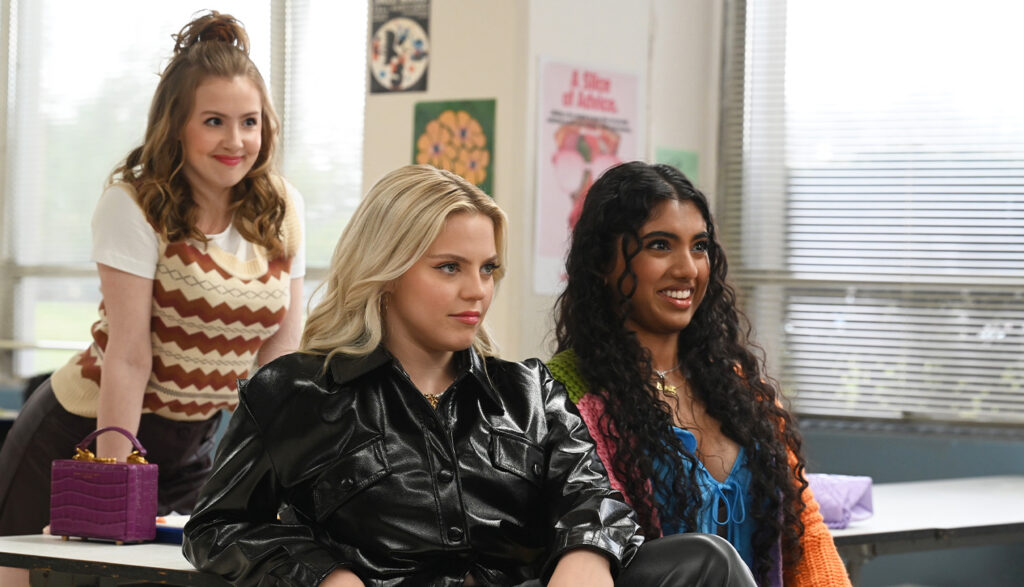
Speaking of Regina George, Reneé Rapp’s performance is the best thing in the film. Rapp previously played Regina on Broadway but had her run cut short when COVID shut down the show. Others might know her from her role on Sex Lives of College Girls or her original music (her first full album, “Snow Angel,” was released last year). She’s a powerhouse performer, with charisma in spades. Her fantastic vocals elevate songs like “World Burn” and “Someone Gets Hurt,” which are already some of the strongest in the score. It’s also hard to deny that she might end up being some girls’ gay awakening.
The cast does what they can with the material given to them. As Regina’s second and third in command, Gretchen and Karen are two of the most iconic Mean Girls characters, and Bebe Wood and Avantika bring fresh takes to them. Wood doesn’t get much time to develop her character, but Avantika manages to make a splash with her song, “Sexy,” and her portrayal of the cluelessly vapid but kind teenager. Busy Philipps is also funny as Regina’s mother, playing an updated version of the “cool mom” trope.

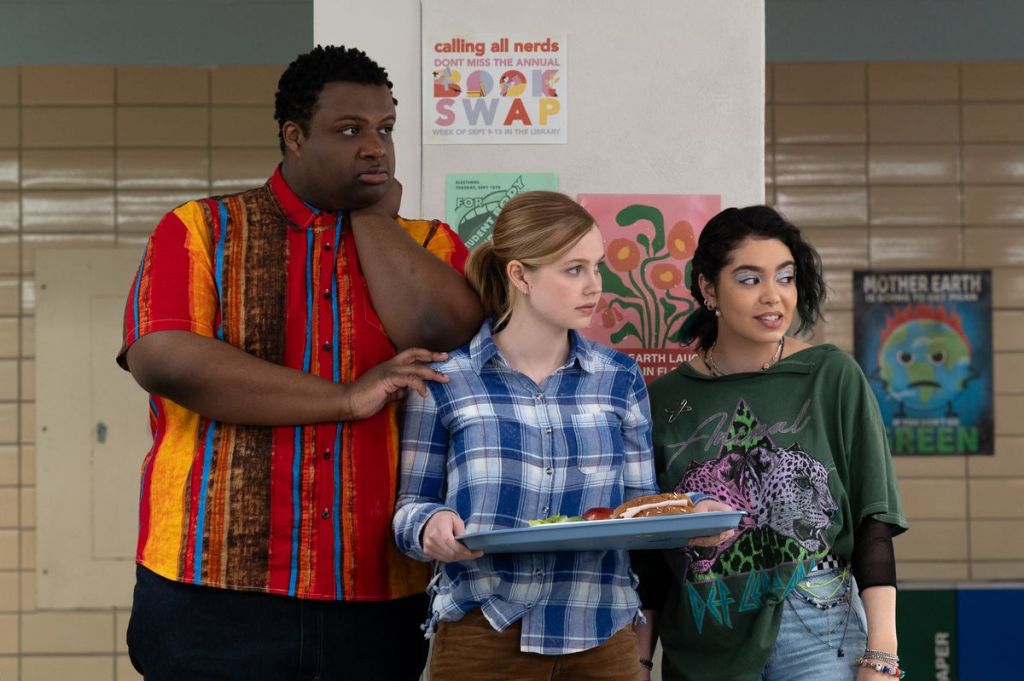
The real dynamic duo of the film is Auli’i Cravalho as Janis and Jaquel Spivey as Damian, best friends who take Cady under their wing. They have impressive resumes to be early in their careers – Cravalho is best known as the voice of Disney’s Moana, while Spivey was Tony-nominated for A Strange Loop. They have excellent chemistry together and emerge as not only the narrators, but also the heroes of the story. While Cravalho shows off her voice in songs like “I’d Rather Be Me,” Spivey’s singing material was largely cut from the film. He still manages to steal just about every scene he’s in.
Rounding out the main cast are Angourie Rice as the lead heroine Cady Heron and Christopher Briney as heartthrob Aaron Samuels. All of Aaron’s singing was cut from the show, so Briney doesn’t have much to do other than model his floppy hair, which he does adequately. Rice feels miscast in the role, without the voice or the charisma to stand out next to Rapp and Cravalho. Her voice isn’t served well by the songs, but she also plays a much blander Cady than Lindsey Lohan did. In fact, it feels as though Regina is the star of the story and Rapp certainly emerges as the main cast member.
Listening to the cast album of the show while writing this review reminded me that the greatest issue in the film isn’t the (very good) singing from the cast, or the updates to the show, or even the cutting of songs that were necessary to plot and character building. It’s the horrific orchestrations for the music, which seem to suck the Broadway out of them and try to make them sound more like generic pop numbers. It gives the sense of listening to Rapp and Cravalho sing over karaoke tracks on YouTube at times and takes songs that were exciting onstage, like “Stupid with Love,” and makes them snooze-worthy.
Despite all of its flaws, Mean Girls isn’t unwatchable. If you go in with low expectations (or an extreme love for Reneé Rapp), you’ll likely have a fun time. The failure of this film should not be taken as a statement that movie versions of musical adaptations of movies shouldn’t be made. There have been shows on Broadway and the West End, like Beetlejuice and Heathers the Musical, that were excellent takes on the movies on which they were based, with iconic scores and updates to the plots and characters that made the new version worthwhile. Hopefully, the lesson that we learn from Mean Girls is not that we shouldn’t bring more musicals to the screen – but that we should be more careful about which musicals and how we do so.




 Culture Cabinet
Leave a comment