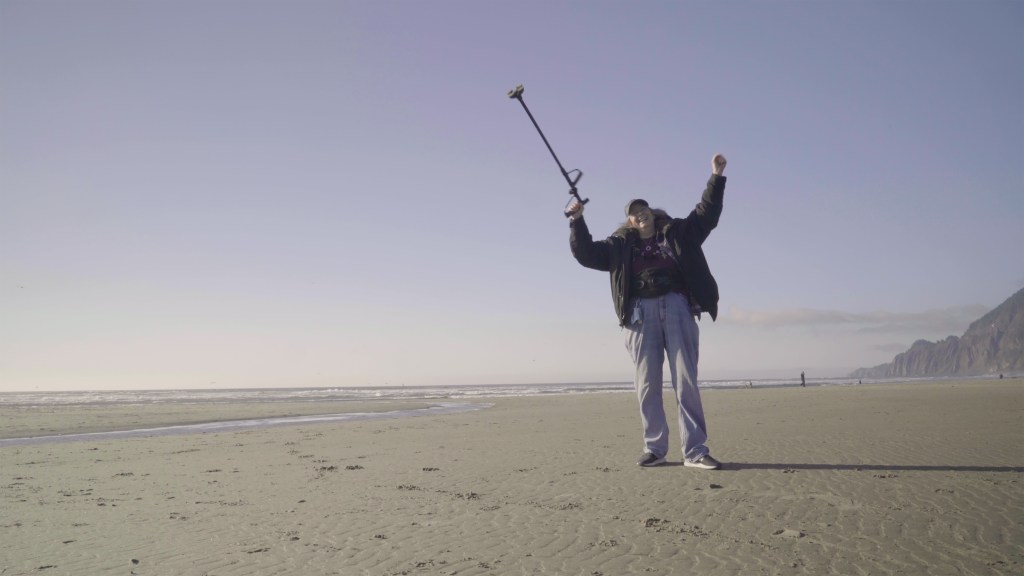
End-of-life documentaries can be hit or miss. Sometimes, the subject presents some wisdom or experience that makes you reconsider how you think about both life and death. However, some fall into tired clichés and offer nothing beyond maudlin voyeurism. Fortunately, the new documentary by Independent Lens and ITVS, Sister Úna Lived a Good Death, teaches as much about how to live as it does about how to die with dignity. Now available on PBS, the hour-long film introduces us to a woman who effortlessly charms everyone around her.
Sister Úna Lived a Good Death follows Boston-born Irish Catholic nun Sister Úna Feeney as she faces her cancer diagnosis. Directed by Par Parekh and produced by Ali Hart, the film is a testament to one woman’s strength and unique outlook on dying. It’s not as depressing as expected, but it is thought-provoking.
Sister Úna might be from an Irish-Catholic family in Boston, but it wasn’t religious fervor that brought her to the Sisters of Social Service. In fact, she was raised in a non-religious family and hated nuns until she met the Sisters of Social Service at summer camp. She was enthralled by the “group of women who are committed to peace and justice,” and felt called to join them. Thus, she went from a troublemaker in school, who broke the dress code and set off the fire alarm during exams, to a “hip nun” who drank, smoked, and rode a motorcycle.

The film opens with her funeral, before backtracking to follow her through the last nine months of her life. We’re introduced to her friends and family, including her elderly mother, who all seem to have a harder time with Sister Úna’s cancer diagnosis than she does. Seeing her bond with her pregnant niece, who sees her as “an extension of my mother,” is particularly touching.
While Úna does have her quiet contemplative moments and is upset at the thought of being separated from her family by death, she’s also intent on accomplishing things before she dies. She wants to go fishing, go to Las Vegas, and plan her own funeral. (“When I do die, it’s my funeral! So I’m doing it my way,” she quips.) The documentary follows her as she does this and more.
The documentary features footage of Úna’s life, supplemented by photos, old video footage, interviews with Úna and her friends and family, and animated drawings. While there’s nothing particularly groundbreaking about the filmmaking, it certainly is able to keep the viewer engaged.

It’s worth a warning that the film does track Úna through her final days, which can be difficult to watch, particularly if you’ve lost a loved one in a similar way. Even leading up to these days, there are frank conversations about death. While Úna might say that knowing she was dying gave her a sense of freedom and grace, it’s not easy to watch as her family grieves for her.
“I wanna die with a splash,” Sister Úna says at the beginning of the film. “I want it to be a celebration of how I’ve been living and how I’ve loved.” It’s abundantly clear from that film that Úna lived just as uniquely as she died, and what’s also clear is the filmmakers’ admiration of her. Between her hopeful view on death, the celebration of the good work she did during her lifetime, and the care taken in how she’s immortalized on screen, Sister Úna Lived a Good Death seems like something of which Úna herself would have approved.
Sister Úna Lived a Good Death is available to watch PBS App and PBS’s flagship YouTube channel.

 Culture Cabinet
Leave a comment