
As someone with a particular interest in nuclear technology, I grew up researching disasters involving nuclear activity such as Chernobyl, Fukushima, and Three Mile Island. The best way to hear about these events though is from first-hand accounts, which luckily have become more available over the past few years.
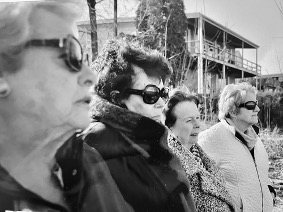
Radioactive: The Women of Three Mile Island centers around a group of four women who experienced a radioactive emergency at the Three Mile Island nuclear power plant in Middletown, Pennsylvania in 1979. Unit 2 had core damage which caused a hydrogen explosion, causing radiation to vent out of the unit and into the surrounding areas. However, the NRC’s official statement said it had “negligible effects” on humans and the environment. There was an evacuation called for those “susceptible”, meaning pregnant women and young children, that lasted ten days.
Unhappy with the way the government was handling the issue, Linda, Beth, Paula, and Joyce formed a Concerned Mothers and Women group. They participated in rallies, were arrested at protests, and were called “crazy activists.” One woman said, “We bake and also try to respond to a nuclear incident.” These women were advocates that the government was lying to them and that there needed to be resistance in some form. They all said they wouldn’t have chosen to live near a nuclear plant if they knew what they know now.
Most importantly, this film discusses the impacts of a radioactive emergency like the one on Three Mile Island that continue for decades to come. There was so much radiation released that the monitors weren’t activated because they couldn’t even read the amounts that were being produced because they were so high. In the 1990s, researchers at UNC started investigations on cancers in the nearby areas. 22 million curies were released, which is the equivalent of around 1,000 x-rays.

People from the area started feeling the effects quickly from trouble standing up to skin rashes to thyroid cancer. Veterinarians reported seeing sows, ewes, and does having still births and some animals were found dead. Recently researchers have started a health study, which had previously been blocked, to look for chromosomal effects in the blood caused by radiation. Even 45 years later, Three Mile Island is still dealing with fallout from the nuclear emergency.
I really enjoyed this film for a multitude of reasons. They interviewed not only the four women, but also reporters and a plant worker. They also discussed the science behind the effects of this specific radiation; xenon binds to hemoglobin in the blood and Iodine-131 contaminates milk and causes thyroid cancer. Following this incident, over 100 planned nuclear power plants were cancelled. Nuclear fission is an alternative to fossil fuels that is thought to be better for the environment- but only when it’s handled correctly and nothing goes wrong.
From what I’ve learned about radioactivity overall and the events in this film, I’m left unsure if there is a fully safe way to utilize forced nuclear fission. In 1942, the first atoms were purposefully split. However, all our information on radioactivity is based around the “reference man”- a 6’0 white 30-year-old man. Radiation is 10 times more harmful to young females and 50% more harmful to a comparably aged female. Ultimately this incident was caused by a few issues from leaky valves, falsified data, sulfur cleaning products that cracked steam generator tubes, and unqualified operators.
While this movie comes at an apt time with the release of Oppenheimer late last year, I was left with some questions. Mainly, they didn’t have the results back from the chromosomes test by the conclusion of the film. It would have been more impactful to know the results of the study. Additionally, the science could have been simplified and explained more for the average person who hasn’t done their own research on radiation. However, I still think this film covers an important topic and addresses the dangers of using nuclear power.





 Culture Cabinet
Leave a comment