
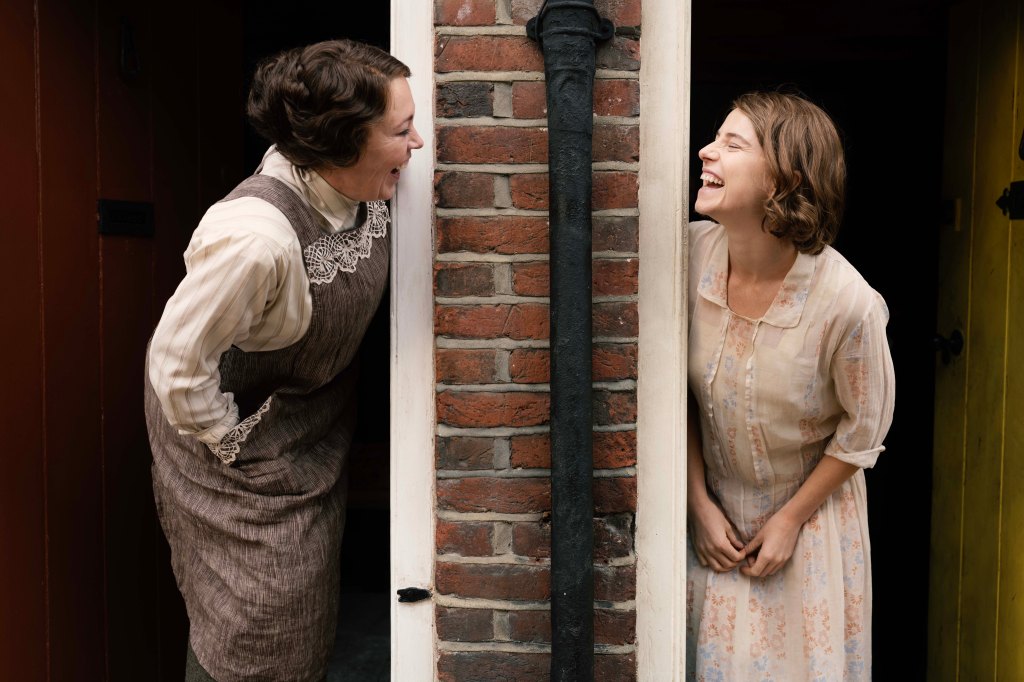
I recently reviewed director Thea Sharrock’s The Beautiful Game, and I was very much charmed by the film, which is now available on Netflix. So I was very excited to dive into her other recent release, Wicked Little Letters, particularly since it’s a bit more my usual taste, being a women-centered period drama.
The black comedy is based on a true story of a scandal that occurred in Littlehampton, England in the 1920s. (This article has more details of what actually occurred.) It’s one of those stories that would seem completely too absurd – if it weren’t true. What Sharrock and the writer, comedian Jonny Sweet, do well is translate the story in a way that maintains all of its raucous humor while also highlighting the ways in which it exposes the misogyny that women lived through in this time period.
Edith Swan (Olivia Colman) and Rose Gooding (Jessie Buckley) are next-door neighbors, who were once unlikely friends. Edith is a very buttoned-up, devout Christian woman still living with her parents, Edward (Timothy Spall) and Victoria (Gemma Jones). The war widow Rose has moved to Littlehampton from her native Ireland the previous spring, with her young daughter Nancy (Alisha Weir) and her new partner Bill (Malachi Kirby).
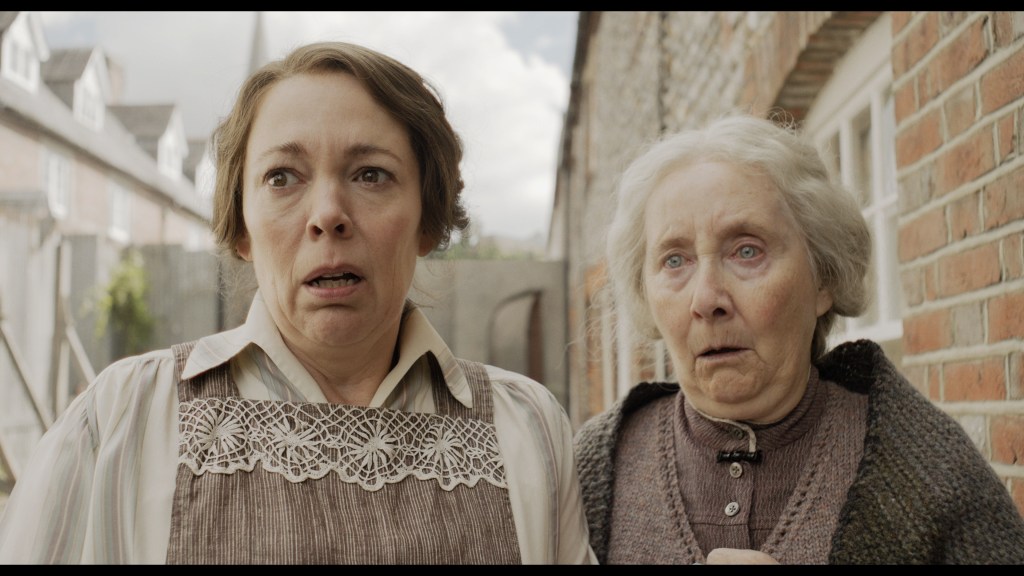
Free spirited Rose is from a rough-and-tumble background, but she is determined to provide better for her daughter. She might go out to the pub and have some drinks, but she’s also insistent that Nancy leave Bill’s guitar alone because “Nice girls don’t play guitar.” The complicated relationship between Rose and Nancy is an effective reminder that motherhood, and especially single motherhood, has always been complicated, especially as mothers try to ensure brighter futures for their daughters.
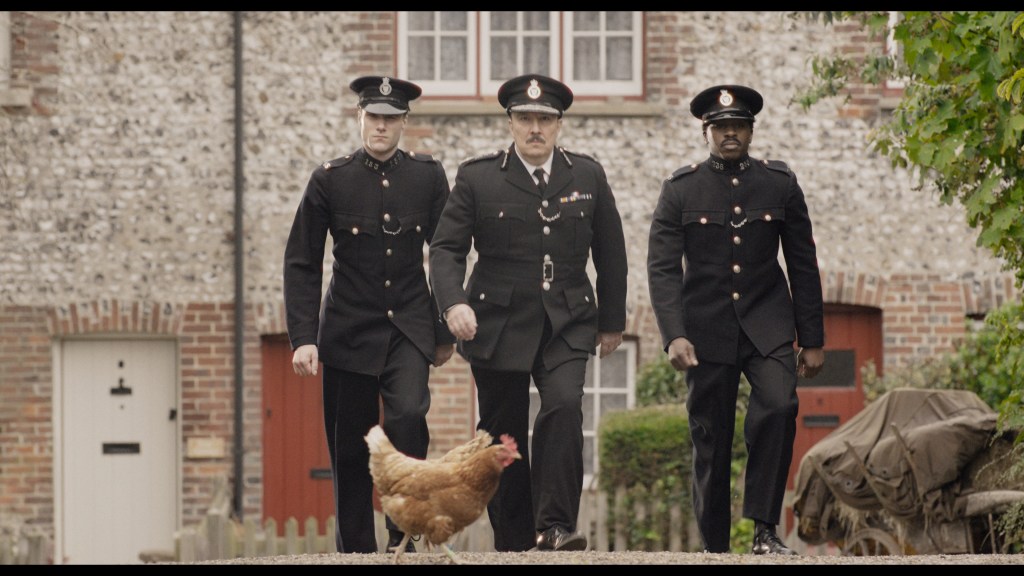
Edith and Rose’s relationship has soured, and Edith and her parents are convinced that Rose is behind the crude, profanity-filled letters that Edith has been receiving. Rose’s behavior, which is “not how a proper lady behaves” makes her an easy target for the blame for the creatively nasty missives. Unfortunately, Chief Constable Spedding (Paul Chahidi) and Constable Paperwick (Hugh Skinner) are as sexist as the Swans and are all too thrilled to arrest Rose as the culprit of the letters.
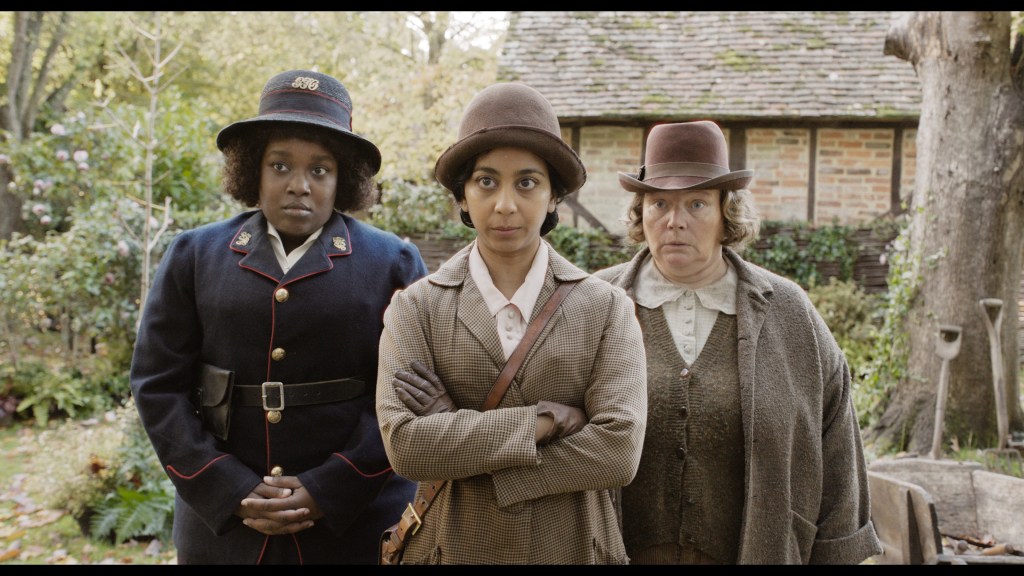
But Rose is far from the only woman in town trying to hold her own in a frustratingly patriarchal society. Woman Police Officer Moss (Anjana Vasan) is trying to continue her father’s legacy of working for law enforcement, despite the other men not taking her seriously. Even Gladys’s title is a reminder that they don’t consider her a real police officer and she’s relegated to less serious work. However, she’s unconvinced by the lazy determination of Rose’s guilt and sets out to bring the truth to light.
While Edith is thrilled with the “waves and waves of love” she’s receiving from the press, her friends are more sympathetic to Rose. They’re not convinced that Rose wrote the letters, and aren’t afraid to point out that Edith has other enemies in their town. While much of the film focuses on Rose or Edith, getting the perspective of these mutual friends provides some neutrality that’s helpful for the audience.
While the film is very funny, in a wonderfully British way, it’s also not entirely lighthearted. From Rose’s determination to provide a good life for Nancy and worry about what will happen to her if she goes to prison to the women trying to be contented with their domestic lives after experiencing the workforce during World War I. “Decent didn’t matter when we were working in their factories and driving their tractors,” one of them quips.
There’s also one shocking moment that severely changes the tone of the film but also feels somewhat unresolved. It seems designed to increase the stakes for Edith, but just ends up being jarring for the audience. Otherwise, the script is delightful, though certainly not for those who can’t handle a few (hundred) curse words.
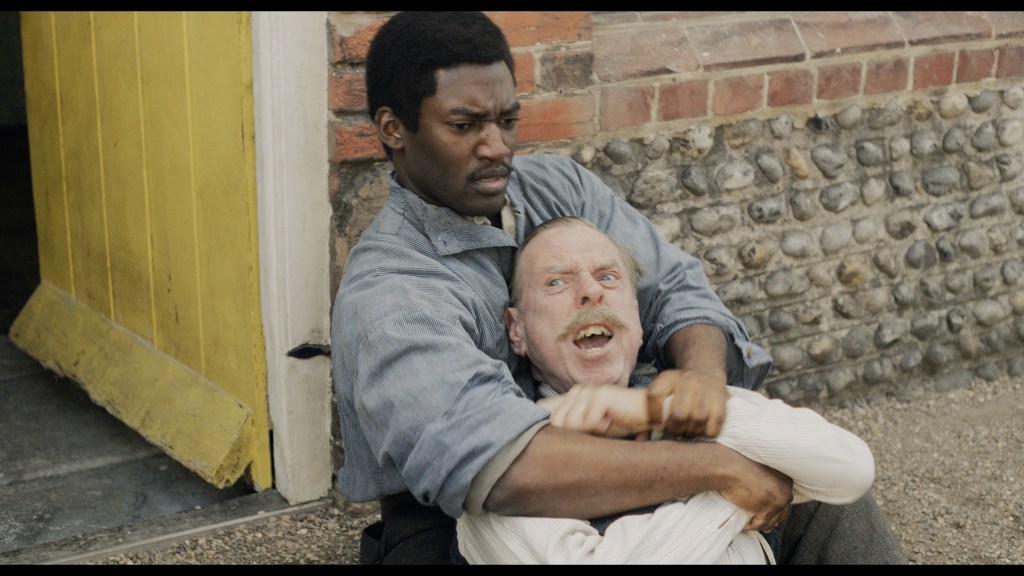
In some ways, Wicked Little Letters is your average British period drama with good costuming, nice sets, and a lovely score by Isobel Waller-Bridge. However, it’s elevated by performances from Buckley and Colman, who remind us that while they are great dramatic actresses, they also both have excellent comedic timing. There’s also something delicious about seeing Olivia Colman use absolutely foul language.
Wicked Little Letters is certainly not one for the usual BBC crowd with its more, uh, unrefined subject matter. However, beneath all of the humor is a story about mothers and daughters, about making and losing friends, and about women straining under the yoke of a society designed to keep them quietly at home.


 Culture Cabinet
Leave a comment