

When I first met James Clements, he was preparing for the UK premiere of his play, The Diana Tapes. Clements wrote the play, but was also portraying Andrew Morton, the journalist best known for his biography of Princess Diana based on tapes that she recorded. I interviewed him for BroadwayWorld UK and was fascinated by his research-based approach to playwriting.
I recently reached out to him and was thrilled to find him willing to do a follow-up interview. The timing was fortunate; he’s now celebrating ten years of working in theater in New York, the UK, and Europe. Clements has produced, directed, written, and starred in a variety of shows, some of which have been with the theater company of which he is a founder and Producing Co-Artistic Director, What Will the Neighbors Say? alongside Sam Hood Adrain. He has appeared in film and television roles, as well as commercials, but his creative focus is on documentary theatre-making with other immigrant artists.
Though Clements is Scottish, he splits his time between the UK and New York. Since he was a child, he knew he wanted to work in New York City. His father had studied in Philadelphia and worked in Los Angeles for several years before returning to Scotland, and Clements would often join him in the summers to travel around the United States and visit his father’s friends. He first came to New York at the age of nine and immediately decided he wanted to live there. He said, “I had a singular vision that I wanted to be an artist and be here.”
Attending university at NYU Tisch’s Experimental Theatre Wing turned that dream into a reality. Clements said, “I knew I wanted to be at the Experimental Theater Wing because it was such a physical program, and my whole education and my history work was so cerebral and so heavy, I wanted to get out of my body.” Originally, his plan was to be an actor, but the program inspired him to pursue directing, writing, and producing as well. “From the beginning, you’re making your own work, you’re generating, you’re creating,” he said.
Clements expanded, “By the time I left that program, I considered myself a theatre maker. I often wonder if I’d gone to a different school if any of this would have happened.” The program not only introduced him to many of his collaborators and gave him “an incredible basis in experimental theatre,” but also inspired him to infuse his work with his political voice.
While at NYU, he also pursued his love of history, adding it as a second major. “My historical obsessions started equally young” as his love for performing, Clements said. “The first was Titanic, after the film. I couldn’t even read yet, but I would beg my parents to buy me these huge history books so I could look at the pictures.” The animated film Anastasia inspired a love of the Romanovs, while he later picked up a fascination with Tudor and Stuart monarchs. (This provided a bonding moment for me and Clements, as I had the same three early historical hyperfixations.)
Pursuing history academically made him realize that there was a way to fuse his passions. “In college, I realized I loved being in these dusty archives wearing vinyl gloves holding a letter that was 200 years old. That’s really exciting to me, but I don’t want to write books about it; I want to write plays about it.”
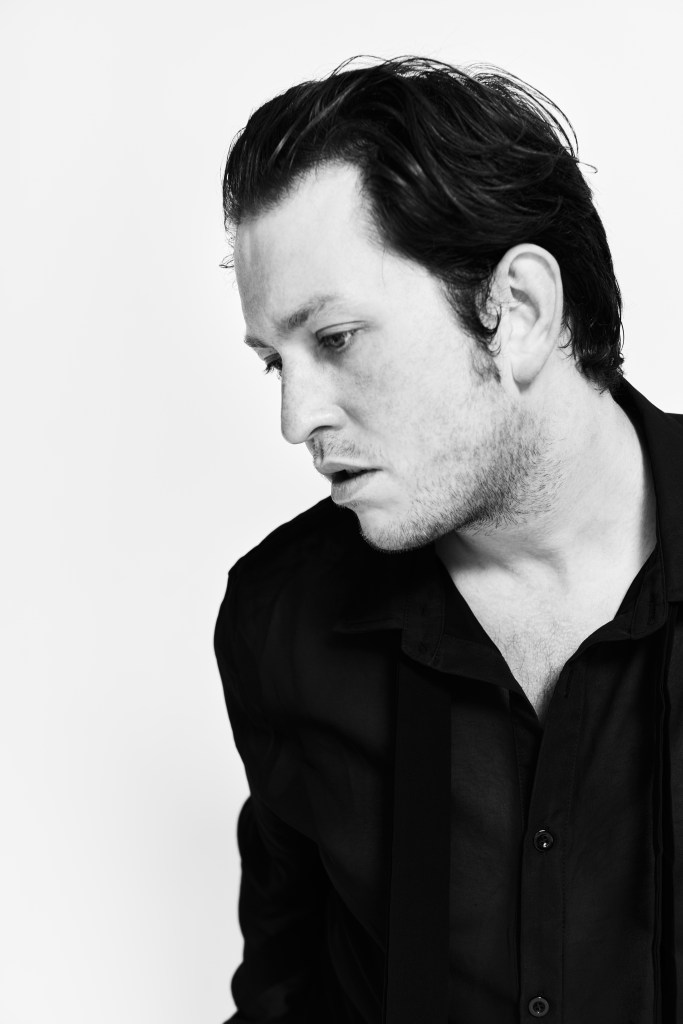
Clements’s love for history makes documentary theatre-making a perfect form for him. I asked Clements how he would define the genre and he said, “Documentary theatre takes pre-existing sources to make work, then each maker decides how much liberty they take within that.” Those sources could be anything from newspaper articles, to government reports, to interviews the theatre-maker themself conducts. Verbatim theatre is a subsection of documentary theatre, in which the playwright only uses quotes directly from those sources.
What does that look like in practice? Clements always starts with research, usually in the archive. However, as much as Clements loves the tangibility of history when working with archived sources, he recognizes that there are issues with it. Archives are “a space that has been so stuffy and rarefied and academic. A lot of the recorded history has been determined by who was running these institutions, but archives to me should be such a democratic space. Everybody has a right to this history, everybody has a right to make sense of their present moment through this kind of backward timeline.”
Research has taken Clements everywhere from Puerto Rico, to Berlin, to Los Angeles. For example, he’s been developing a piece about Leni Riefenstahl, the German filmmaker best known for making Nazi propaganda. His play Beauty Freak has been a work in progress since 2018; it explores “the line between art and propaganda, and the idea of if art can be separated from the artist.” He went to the Imperial War Museum in London to watch “reels of [Riefenstahl’s] films that were taken from the Chancellery in Germany and stamped enemy property. I think seeing that adds a whole different layer to watching it on YouTube.” It led him to question, “Whose hands did these run through? Who held these, whose desk drawers were these sitting in?”
Not only is Clements himself a documentary theatre-maker, he and collaborator Adrain are also training younger generations through his role as an Adjunct Professor for Drama at NYU Tisch School of the Arts. He and Adrain also teach at Marymount Manhattan College, and have previously lectured at CUNY Queen’s Drama Department and at Ohio State University.
One of their recent classes was an introduction to documentary theatre-making, in which they covered the definition of documentary theatre, source analysis, and classic examples in the genre like Sweat and My Name is Rachel Corrie. For the class’ final project, students must pitch a piece of documentary theatre, with some research already done. Clements and Hood encourage their students to choose whatever they’re passionate about as their topic, leading to projects on college wrestling’s effects on male body image and the theories that Louisa May Alcott may have identified as male or non-binary.
Clements said, “What I love about teaching is it connects Sam and me to the concerns and questions being asked by the the emerging generation of young artists. It teaches me so much about things in the world that I didn’t know. It keeps me really excited about making source-based theatre because, as with any career, as with any creative process, sometimes we have not so positive days and then getting to go into a classroom and see it have such an impact on emerging young artists is a kind of proof of concept for us.” Teaching is something he hopes to do more of in the future.
When making theatre, Clements is often drawn to other immigrants for collaborators. The conversations he’s had with them spoke to the kind of political theatre he wanted to make. He said, “We’re talking politics, and we’re talking about identity, and we’re rigorously exploring how do you hold onto the parts of your heritage that make you, you, while also not living in a bubble. I just naturally fell into those kinds of groups and those kinds of conversations.”
One such project was Ellis Island, commissioned by Rattlestick Playwrights Theatre and the NY Theatre Salon for the 2021 Global Forms Theatre Festival. He co-wrote the play, working with an Irish actor throughout the pandemic, telling the story of two immigrants in the Ellis Island quarantine hospital in 1921, but interspersed with contemporary immigrant interviews.

Another meaningful collaboration was between Clements and Venezuelan artist Manuel Oliver, who lost his son in the Parkland shooting in 2018. Guac: My Son, My Hero was developed at MANA Contemporary in New Jersey in 2019, before premiering Off-Broadway and going on a national tour. Clements expressed his gratitude at being connected with Oliver through a producer and getting to contribute to it. He said that he wasn’t sure how the fact that they’re both immigrants shaped their process, but that perhaps it was “our interrogation of American values, our struggles to define and understand what they are.”
With a background of work so wide and varied, I had to ask: how does Clements get his ideas for his plays? Often, it’s a book or an article that sparks his interest in a topic, though some plays have grown out of life-long fascinations. He also is dedicated to reading (or at least skimming) the newspaper daily. “When I’m traveling, I’m seeing as many museums, shows, cultural pieces as I can,” he explained.
Sometimes it comes about through conversations with other theatre-makers, especially with other immigrant artists who are also having “interrogations of home and identity and language and cultural heritage.” When planning their next works, he and Hood bring ideas to the table and then ask themselves, “Are we the right people to make this? Do we have the resources to make this? Are we able to say or ask something new by exploring this? Is this the right moment?”
Some pieces are even more personal. They’re currently working on At the Barricades, which examines Scottish, Cuban, American, and Spanish soldiers during the Spanish Civil War in the late 1930s. Clements said, “Growing up, that conflict was something really fascinating to me. My grandfather was too young to fight, but he came from a working-class area in Glasgow and had really strong childhood memories of Glasgow workers going to fight.” When his grandfather passed away in 2009, the family scattered his ashes in front of the Spanish Civil War Memorial in Glasgow.
Clements said, “It’s so beautiful for me whenever I get to play Scottish characters and explore Scottish stories. I play a character that shares a name with my grandfather, and I interviewed a lot of family members about his past and things that I’d forgotten since I was a child. I’ve even incorporated a lot of his mannerisms, as I remember them, into the character. I feel like I’m honoring him and my family’s incredible legacy as working-class guys, people who cared about politics and, and fought for what was right and just.”
There had been several times he’d thought about doing a piece centered on the conflict, but it didn’t feel like the right time. That is, until they witnessed conversations around what solidarity looks like in the wake of the Russian invasion of Ukraine. Clements said, “I love this piece because it’s a more mature, nuanced, complex topic that speaks to millions of politically engaged working-class social activists. I see my growth as an artist, and I see our growth as a company in our ability to grapple with things on a larger and deeper scale.”
He certainly has grown a lot since I first met him and saw the UK run of The Diana Tapes. He now thinks back on that show as the one that “really did change my life, and in many ways kind of launched my career.” The play examines “Diana’s impact on British life and thought and culture,” focusing on her recording of the tapes for Andrew Morton’s biography. It first ran at the Edinburgh Fringe Festival before doing two runs in New York and playing in London, Providence, and Toronto.
One of the wild things about making documentary theatre is that occasionally, one of your subjects might see your work. Andrew Morton came to see the show in London. Clements recalled: “When it opened in London, Andrew Morton, who I was playing, came to see our show. I was so terrified, the most terrified I’ve ever been as an actor. The first joke in the show, which I can’t remember now, I just heard his laugh ring out through the theater, and I thought, ‘Oh, thank God.’ He came back afterwards and we hung out, we went for dinner. We talked about Diana and Britain and class politics, because he’s from the north of England so he had a very acute sense of all of that.”

Clements is very grateful that he’s still working in theatre ten years after the start of his career, and very aware that many people aren’t able to. “If you don’t have a really clear reason why, I think it wears you down,” he said. “I’ve appreciated the opportunity to really refine and get to know why I want to be an artist and why I want to be a political artist. There’s a [James] Baldwin quote, ‘Artists are here to disturb the peace.’ I feel very strong about that.”
When I asked Clements what he has learned in his ten years, he said he’s better now at knowing when to listen to the other voices in the room, and when to stand up for his vision. Another important lesson is the necessity of taking your time and not rushing projects. He said, “You want your work to be topical, and you want your work to be current. But at the same time, in the first few years of my career, I put myself on such a treadmill, and I just wanted things to happen, and I wanted bigger opportunities, and bigger stages, and bigger budgets, and I wanted bigger roles. I was so hungry, and I’m still hungry, but I have some more perspective on it and looking at it as a long game. Ten years is a very small percentage of what (God willing) will be a 50-year career.” He also shared with me the advice he gives to his students: “Don’t let the perfect be the enemy of the good.” It’s helpful advice for anyone in a creative field.
It seems like the norm for Clements is to be working on several projects at once, perhaps because he allows each one the time to go through several iterations, and right now is no different. He’s still developing At the Barricades, with hopes for it to go on tour in 2026, the 90th anniversary of the Spanish Civil War. He’s also just wrapped up a run of the interactive theatrical experience Third Law at the Culture Lab in New York City. Then, there’s another piece in its early stages about the strange 20 year journey that former First Lady of Argentina Eva Perón’s body went on between her death and her burial. “It explores the idea of the body as a relic, and the magical properties of bodies and what an afterlife looks like when you’re living it so publicly,” Clements explained.
What are Clements’s goals for the next ten years? “Trusting myself more,” he said. “I hope if we do another interview in ten years, I’ve been lucky enough to have many more projects, many more wonderful collaborators, and our company has continued to grow in a way that feels ethical.” He wants to continue working with Adrain and What Will the Neighbors Say?, continue developing his practice of documentary-theatre, and continue working in New York and Scotland.
It’s easy to believe that he will, and it seems that now is an apt time for the kind of political theatre he’s involved with. He said, “People find ways to survive, but it does feel like we’re in a very volatile moment. In that sense, political theater and provocative theater that doesn’t give folks easy solutions and encourages them to look at their own lives, feels more essential than ever to me.”
Clements is one of those theatre-makers whose passion and drive shine through the moment you get him talking about theatre. His love for not only the finished product, but also the process of making theatre, his dedication to creating meaningful political work, his endless thirst for knowledge all make me confident that these first ten years are just the beginning.
You can follow James Clements on Instagram and find out more about his career on his website.
Photo Credit: (c) Pablo Calderón-Santiago

 Culture Cabinet
Leave a comment