

Black women in America have always faced their own unique set of challenges, as they face discrimination from white men, white women, Black men, and even sometimes Black women. Dominique Morisseau’s Confederates explores this experience by showcasing the lives of two Black women, who live over a century apart, side by side.
While Sara is an enslaved woman turned Union spy on a plantation during the Civil War and Sandra is a comparative politics professor at a modern university, they both encounter racism and sexism from those who surround them, sometimes even from surprising sources. This marks the third time Playmakers Repertory Company’s Artistic Director Vivienne Benesch has brought Morisseau’s work to the stage, following their productions of Detroit ‘67 and Skeleton Crew.
At the heart of Sandra’s (Kathryn Hunter-Williams) story is a meme that someone has placed on her office door. The meme shows her head photoshopped onto a photograph of a Black woman breastfeeding a white baby, and (perhaps unsurprisingly) the university is doing little to find the culprit. Over a hundred years before, Sara (Mengwe Wapimewah) is frustrated by not being able to fight with the Union army to secure her freedom and having to continue her work on the plantation.
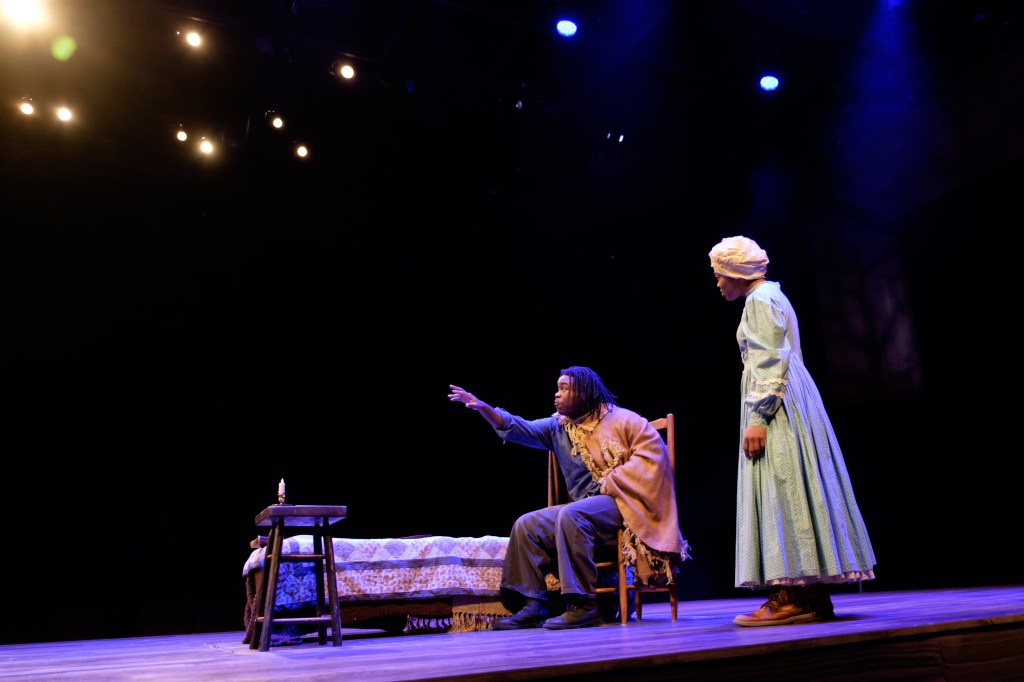
As the play flips between the two women, each scene explores their relationship with a corresponding person played by the same actor. Sara’s brother Abner (Kristofer Wilson) seeks her medical help while telling her of his experiences with the Union army, while Sandra’s student Malik (also played by Wilson) confronts her over his grade on a paper, eventually accusing her of favoring the female students in her class.
The daughter of the plantation owner, who was once Sara’s childhood playmate, returns to her home from her failed marriage. Missy Sue (Elizabeth Dye) tries to bond with Sara over her infertility and suggests that the pair can work together. In the present day, Candice (Dye, again) is Sandra’s white TA, who is somewhat domineering in her organization of her boss’s inbox. She prattles on about her latest breakup, before quipping, “Nobody wants to hear a white middle class girl’s problems.”
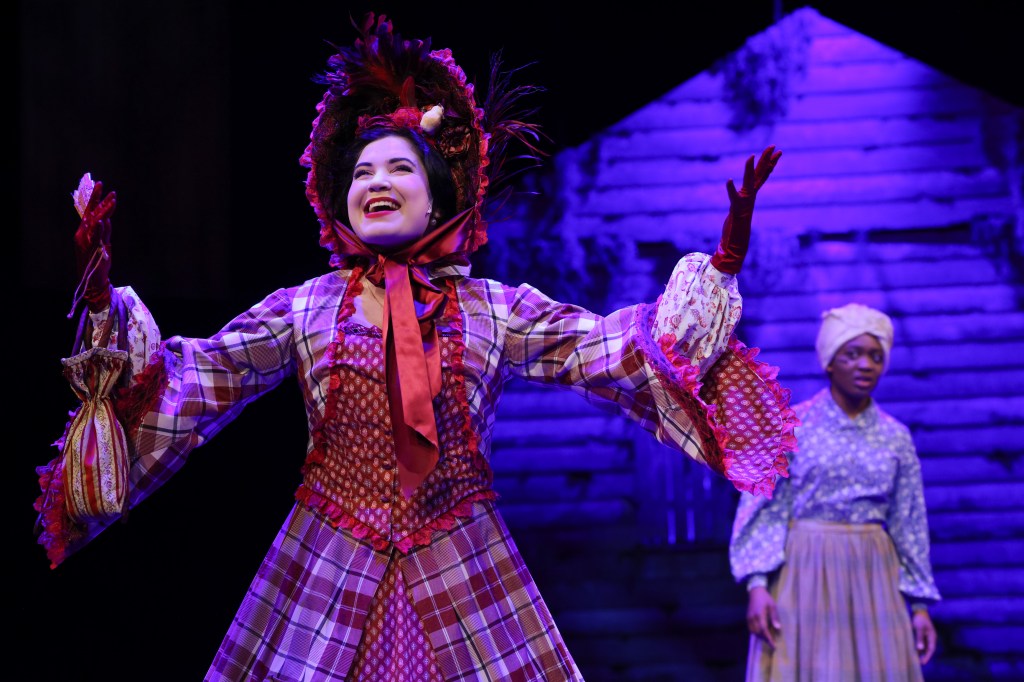
Missy Sue promotes Sara to working in the main house, which brings her into the path of LuAnne (Tia James), an enslaved woman who is sleeping with their enslaver to gain better treatment. In the present, Sandra is visited by Jade (James), the only other Black woman professor in their department. While she opens the conversation by telling her she’s an inspiration to her, it soon becomes clear that the two Black women have been pitted against each other for their different approaches to teaching and the natural rivalry that can occur between two people of a minority group within an otherwise homogenous environment.
Only in the final scenes of the play do we get to see more than two characters interact with each other, as each set of characters comes to a climax. While the show is funny throughout, using humor to approach complicated and serious topics, in its last section, it nearly turns into a dramatic farce.
Morisseau has thought-provoking points to make both about the plight of Black women in academia and about the experience of Black women on plantations. From the small microaggressions that they face (like Candice telling Sandra, “Now I’m working like a slave, no offense”) to the heavier realization that people of all genders and races seem to treat Black women as though they don’t have any feelings of their own, Morisseau is never afraid to dive into uncomfortable territory while luring the audience in with humor.
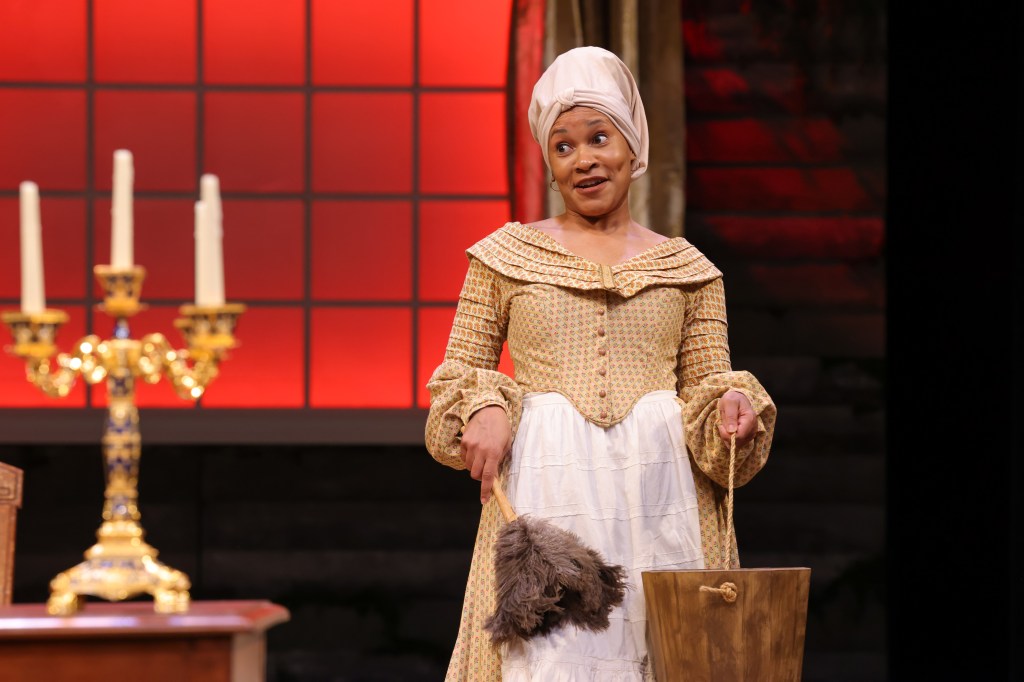
The entire cast does a great job with the material, but it’s Hunter-Williams’s performance as Sandra that stands out, as she slowly allows her calm professional demeanor crack to display the distress underneath. Wapimewah makes Sara’s frustration with her life tangible for the audience, imbuing her with a strength that any soldier would be lucky to have.
Wilson, Dye, and James excellently differentiate their two characters, showing how even very different people can create the same kind of challenges for Black women. Pamela A. Bond’s costumes also help create the two worlds of the play, as does Lex Liang’s scenic design. The way that the show shifts between the three sets (Sandra’s office, Sara’s cabin, and the plantation owner’s office) is ingenious.
Director Christopher Windom has brought Morisseau’s Confederates to the stage in a gripping and thoughtful production, helmed by two talented actresses. It’s not always easy to watch, but perhaps that’s a good thing. Theatre is one of the best ways that we can confront difficult truths, and Confederates is an important contribution to this canon of thought-provoking political theatre.

Confederates is playing at Playmakers Repertory Company until March 23. You can find out more or buy tickets here.


 Culture Cabinet
Leave a comment