
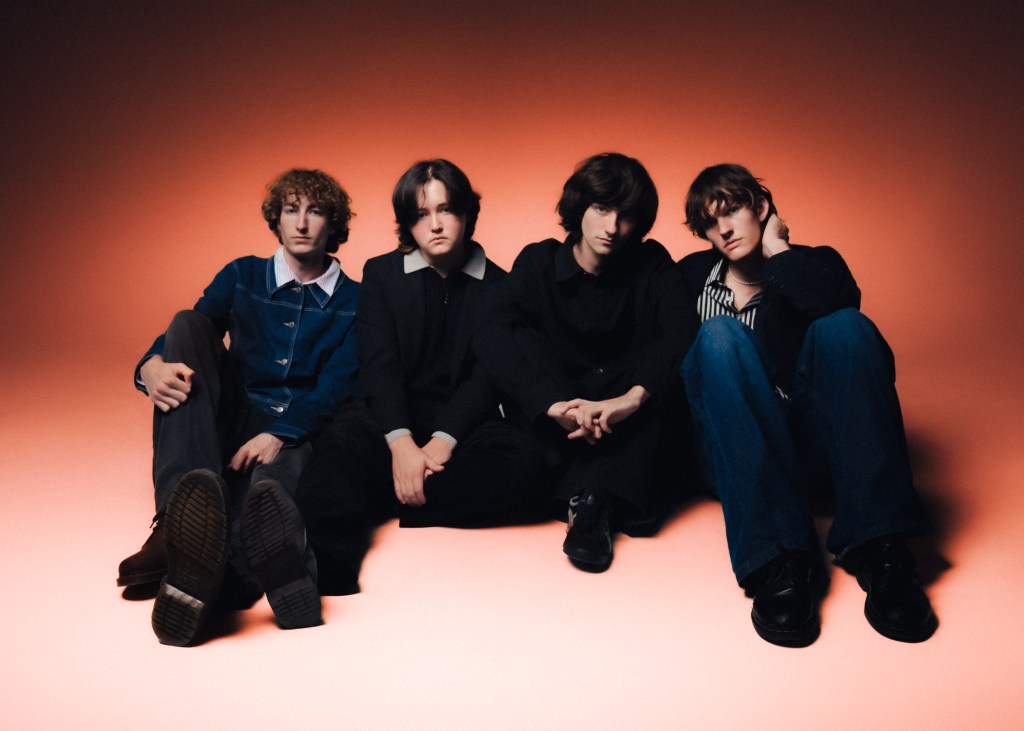
Borderline has a unique origin. Four childhood friends, who grew up together in the same neighborhood, have been making music together in some capacity since they were children (albeit, not always on the level they are now). Such closeness translates not only as cohesiveness in making music, but, as I’m learning in speaking with them, in person. As the New Zealand-based band enters a bold new chapter with their EP Chrysalis, out today, the members reflect on their roots, their growth, and the music that binds them.

The group is made up of Ben Glanfield, Jackson Boswell, Matthew McFadden, and Max Harries. A lifelong creative unit, the four friends have come of age together on both a personal level, and as artists.
“I think it’s something we’re really proud of,” says McFadden on the band’s evolution, in an interview with Culture Cabinet. “We put our heart and soul into the band, and we work so hard on it. I think to see we’re starting to reap some of the rewards for that now, and it fills us with lots of pride.”
That sense of pride has only deepened as their sound has solidified. “This is the first project where it’s been solely the four of us, and every single song has been the four of us at the core of it,” says Glanfield. “So it’s kind of the first project that’s been Borderline as it is and always will be from now on. It’s really important to us that people know that this is us. This is what we’re doing now. This is kind of the level we’re at when it’s the four of us playing together.”
“It really feels like we’ve evolved into the band we want to be,” adds McFadden. “We really feel like we’ve come into our own a lot as people and as musicians and as a band that gels together. I think this body of work is really something to show for it.”

Rather than writing Chrysalis in one sitting, the band slowly curated the EP over time. “Some of these songs we’ve had for a while,” says Harries. “Maybe a year and a half to two years. It’s been a bit of a long process recording them over time for this EP. But we really think these five songs represent where we are right now and what we want to put forward. So it wasn’t really, ‘We’ll bunker and write five songs, that’s the EP.’ We took the best of that period and put it on there.”
For a band that thrives on experimentation, the group doesn’t confide themselves to any specific genre. Rather, they thrive on the ability to shift genres and sounds, even within the same EP. “I think one of the biggest parts of Borderline is how diverse our sound is,” says Glanfield. “This EP showcases the different genres we can jump into and jump out of, and how different our music can be, but how ‘Borderline’ it still sounds. We try our best not to write the same song five times. So, it was written sporadically, but it still all feels cohesive because it’s Borderline.”
When asked about the group’s approach to collaborating in songwriting sessions, McFadden explains that it’s merely born from instinct. “I don’t think we really have to try in that aspect. We just go with whatever inspires us creatively and follow that path. I think it’s more just the chemistry we’ve got with each other, having played with each other for a long time, and the way we’ve honed our craft on our instruments. That sort of personality hopefully expresses itself in the music. But I don’t think it’s an intentional thing. I think it’s just a byproduct.”
That chemistry also makes collaboration almost eerily seamless. Just in the twenty minutes I’ve spent chatting with three fourths of the group, I can sense a keen synchronicity. While each member has their own clear voice, there is also a cohesive sum of the parts at play. “It’s kind of scary how much we work together and how similar we all are,” says Glanfield. “We’ll end up having the same reactions to everything or the same ideas at the same time. It definitely makes it easier because we’re all so in tune with each other with what’s good and what’s not.”
But the band values difference as much as sameness. “You always have to have those differing opinions to improve,” Glanfield continues. “If you’re all just saying, ‘Yeah, that’s good,’ then there’s no pushback on ideas. So it’s important to keep that slight sort of difference in all our personalities so the music can really evolve.”
“We’re slowly blending into the same person,” McFadden jokes, “while hopefully still keeping a sense of who we are. I think that also reflects in our music and our creative process.”
Every track on Chrysalis holds meaning for the band, but a few stand out. “‘Breakdown’ is an absolute treat to play live,” says Harries. “We wrote it a while ago with the boys from Bali Regatta in our drummer’s basement, and it’s morphed and changed. But where it is right now, we’re really proud of it. It’s such a good vibe to play live, and a good vibe to listen to.”
“When It’s Raining” also holds a special place in their hearts. “‘It was like 12 o’clock at night or something,” recalls Glanfield of the song’s recording. “We just recorded another song, might have been ‘Heartbeat.’ I started playing this little thing on the piano, which was the piano part, and then Jackson jumped on the drums. Honestly, the whole song came together in like half an hour. We all got midnight snacks, wrote all the lyrics, and the thing was just done in the blink of an eye. I think that’s still some of our best work.”
The band’s emergence beyond New Zealand continues to feel dreamlike, as the band has scored attention in international sound waves, from the United Kingdom to the United States. “It’s been pretty surreal for us,” says McFadden. “Being from New Zealand, such an isolated country, we have such an awesome music scene here, but it’s quite hard to break out. Having played international shows and just seeing people in the crowd, it’s just not something we can possibly expect. Every time we’ve played a show to a room full of international people, whatever country it is, it just feels insane. It’s something we’re super grateful for, and I don’t think we can get used to. We just want to do as much of that as we possibly can and meet more cool people and expand our audience.”
At the end of the day, Borderline is about connection. “We just want people to feel something when they listen to it,” says Glanfield. “Every song comes from some emotion or feeling or scenario that we’ve dreamt up. You want people to relate to [your music] in some way and feel it in the way they want to feel it. A big goal of ours is for people to listen to music like we’d listen to Fleetwood Mac, and our minds would expand. We want people to feel that same thing. That’s sort of the end goal.”

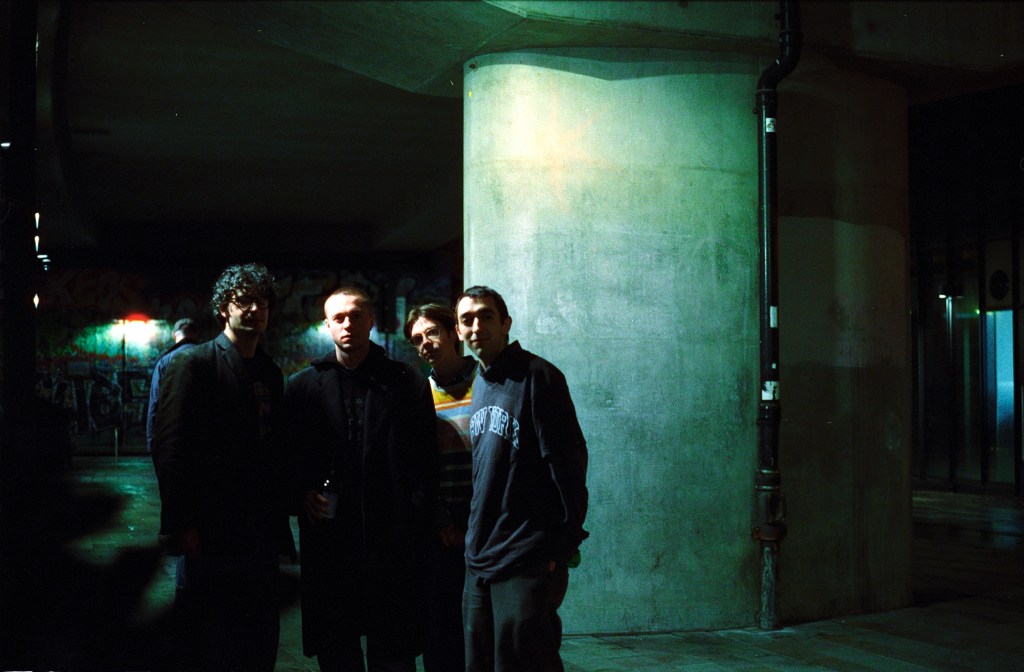

 Culture Cabinet
Leave a comment