

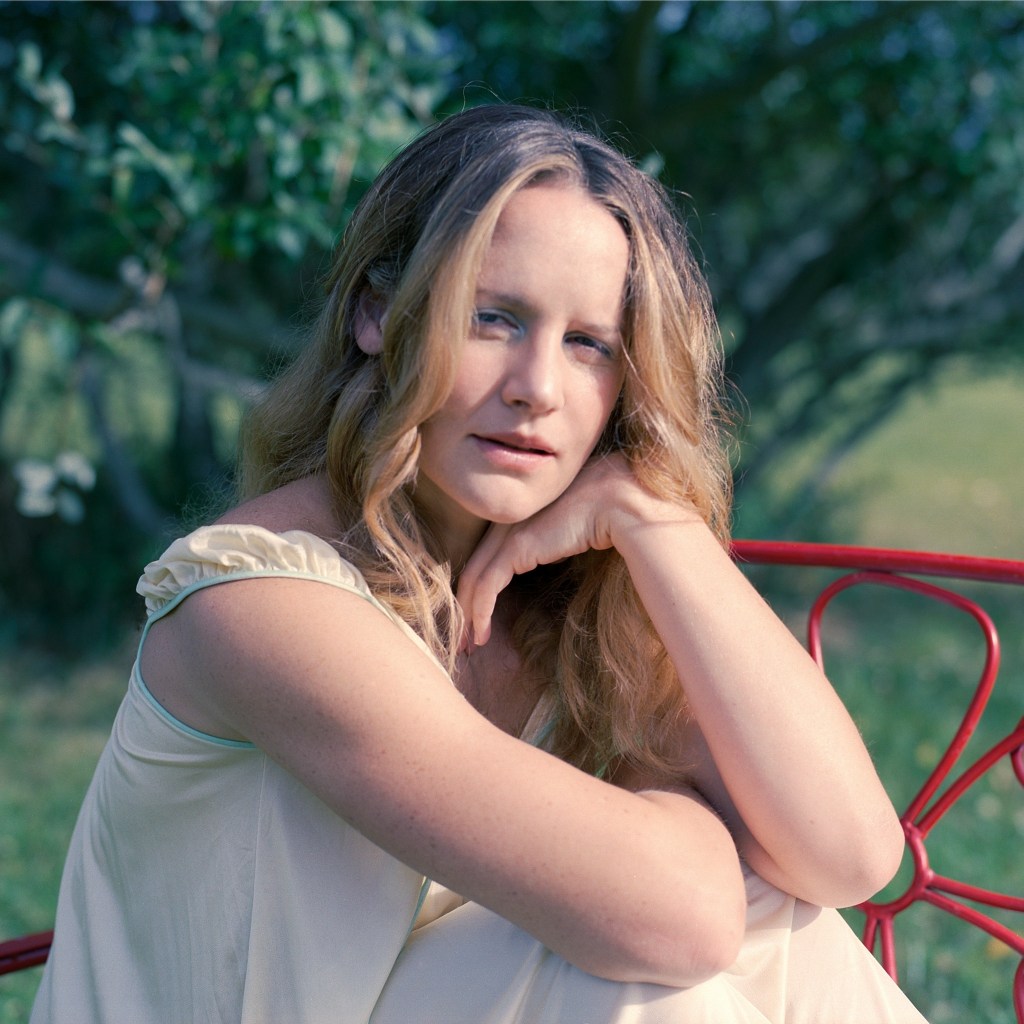
By the time she was four years old, Lauren Lovelle was already onstage with a microphone in hand, and a blankie in the other. “It was ‘Your Cheatin’ Heart’ by Hank Williams,” she recalls of the first time she ever sang on stage. “I always joke that’s a song every four-year-old really needs to know.” When a young Lovelle attended a performance of her father’s honky-tonk band, she found herself coming up on stage, placing her blanket down on the monitor, and singing the Hank Williams classic for a crowd. And thus, a star in the making was born.
Lovelle’s journey to her debut EP, Other Dreams, out tomorrow (September 9), didn’t follow a straight line. Instead, it doubled back through trauma, self-doubt, and detours into musical theater and even nursing school. But through it all, country music remained her compass. “Ever since that first time, I just never wanted to stop,” she says. “By the time I was ten, I was taking whole sets with the band.”
Still, growing up in rural Kansas, Lovelle found herself pulling away from the genre when she moved to Wichita for high school. “People were like, ‘You sound country, you have an accent,’” she says. “Times were tense. Trump had just been elected, and I was really insecure. I didn’t want to be seen doing that music.” So, she leaned into musical theater instead, shelving her honky tonk roots.
College brought an even more harrowing detour. After enrolling in nursing school, Lovelle and a friend survived a sexual assault and spent years navigating a court case they ultimately lost. “It affected my whole life,” she says. “I genuinely felt like my brain was broken and not working the same. I still don’t feel like I have my full brain power back.”
It was in that darkness that music reemerged, serving as both an escape and a lifeline, a way for Lovelle to anchor herself. “The only thing I could see myself doing was to get in a band,” she says. Craigslist and internet searches led her to a rough-and-tumble cover band circuit, where she played biker bars and casinos. “Someone got stabbed at one of my gigs in the parking lot,” she says. “I was underage, singing in bars, getting snuck in, given drugs and alcohol. I was like, ‘Okay, I need to be careful.’”
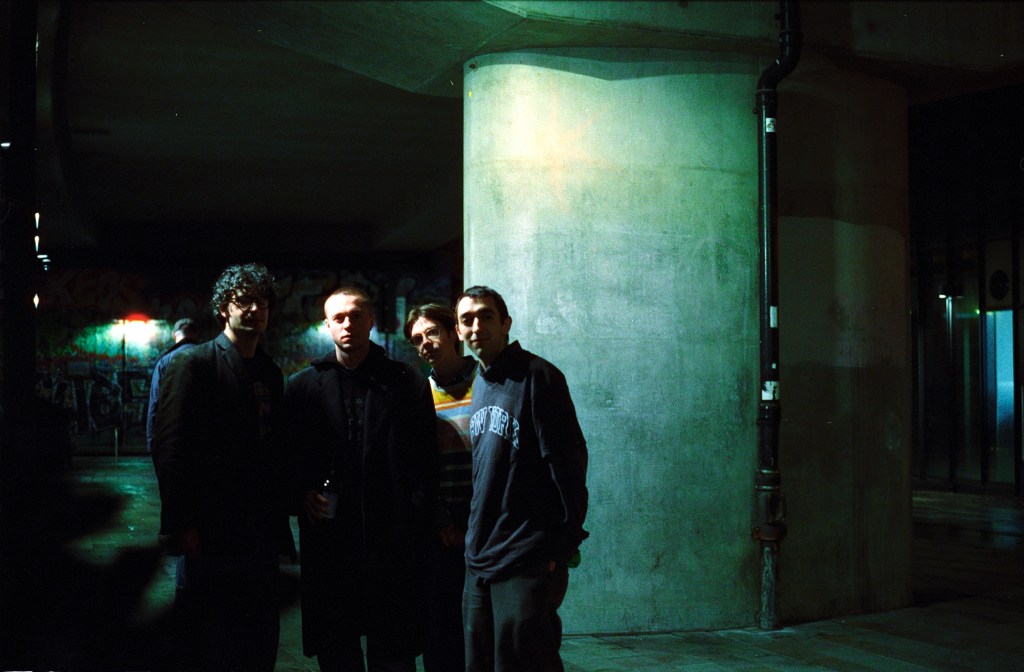
Eventually, she left the scene and started her own band. “I finally got to play my own songs, and only the covers that I wanted to play,” she says. “I feel like I found the most amazing musicians ever. I can’t believe that they’re all men and they’re so amazing. I’m just so happy to have met people who are down for the music.”
It wasn’t until a stint in audio engineering school that Lovelle committed to putting out her own EP. “I was in a class of all boys, and they were just naturally really good at it,” she says. “I remember all of them sat me down and were like, ‘You belong on the other side of the booth. You should spend all of this time and money on your band.’ It wasn’t condescending, it was out of so much love. I cried. I was like, ‘Thank you. I needed a nudge.’”
That push, and the growing fire she felt even singing “stupid cover songs,” brought her back to writing. “Even my happier songs have been written in a really dark time,” she says. “I just kind of have to write it out because I’m not understanding how it’s working in my brain.”
The result is Other Dreams, a four-song introduction that Lovelle describes as “the first four that felt right.” While heavier material sits in the wings, she wanted to come in “a little softer.” “I was like, ‘I don’t know if I’ll start with the song about death,’” she jokes.
Lovelle doesn’t have lofty ambitions about what listeners should take away from her music. She just hopes that it moves them somehow. “If it just makes them giggle, that’s okay with me. If it makes them nod along, or dance, or put a little bounce in their step, that’s great too.”

But at the heart of it, her music is about connection. “I often make my art to feel less alone,” she says. “It makes me feel like I am ordinary in a really comforting way. That I go through things other people go through. I am like other women, and I’m proudly like other women.”
Watching someone respond emotionally to her music, whether it’s joy, grief, or anything in between, is what makes it all worth it. “Any emotional response is just super valuable to me,” she says. “If someone tells me a song did that for them, then it was successful.”
After all, Lovelle’s been singing as long as she can remember. And now, for the first time, she’s singing her own story: with no blankie, no filter, and nothing to hide behind.
 Culture Cabinet
Leave a comment