
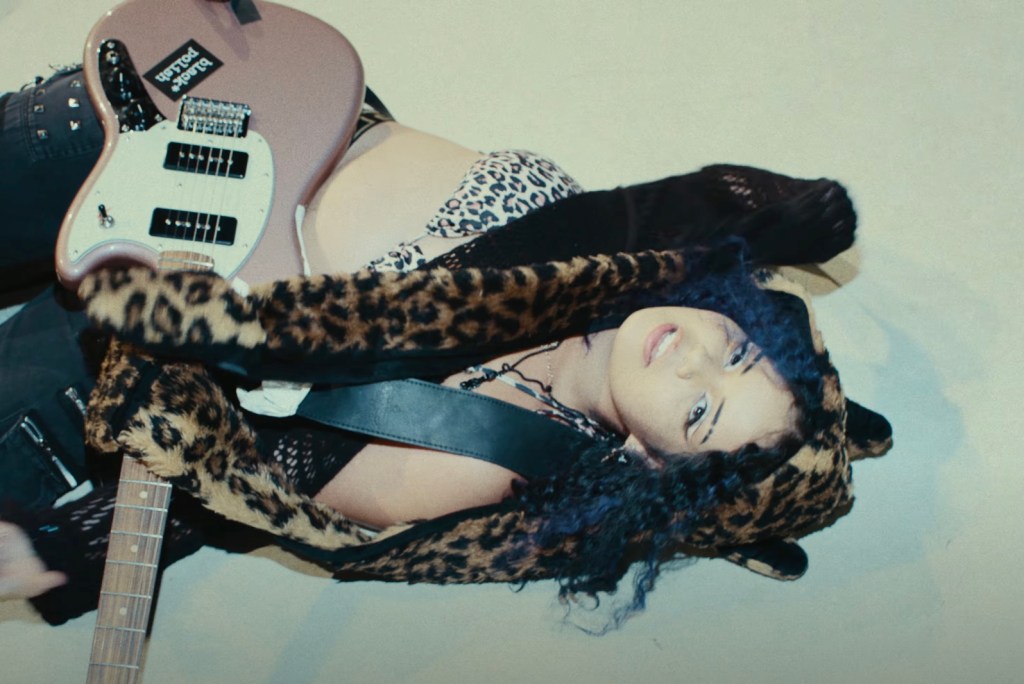
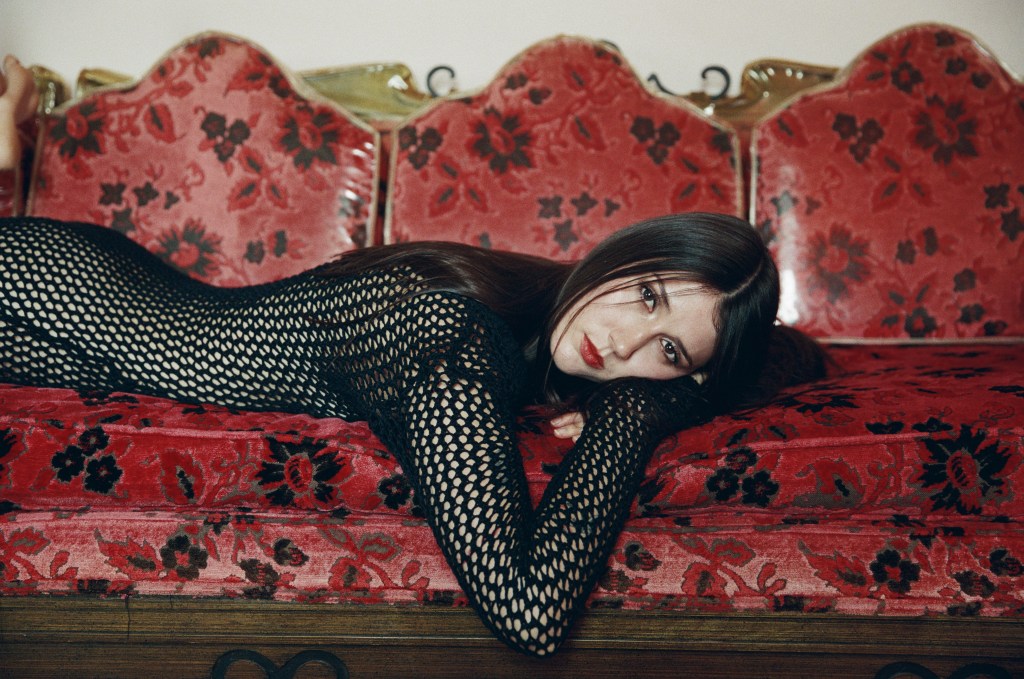
There’s a sense of cinematic gravity that follows Black Polish. It’s the kind that makes every note feel like a scene in a larger film. Jayden “Jay” Binnix, the Los Angeles–based artist behind the moniker, speaks with the easy focus of someone who’s already built a world inside their head and is now letting the rest of us in.
“I’m always creating music,” Binnix says in an interview with Culture Cabinet. “The first song on the album I ever made was ‘OBSESSION.’ I just wanted to make something for myself that was completely out of my comfort zone. That song is what sparked the entire inspiration of the album, that sound that I’ve never captured before. All the songs were built around that one track, and the character came a couple months after.”
The result of that spark is Black Polish’s newest album, YUNA, out tomorrow. The album plays out like a cinematic story that refuses to be confined to one genre, and insists on taking the listener on a wild journey. “Honestly, I just see albums as a movie soundtrack,” Binnix explains. “I don’t see myself sticking to one genre for the rest of my career. Now that I’ve done so much I’ve never touched on before, I just went into the studio with confidence that no matter what I make, I know it’s going to sound like me. I know that I’m the through line no matter what the genre is.”

That self-assuredness didn’t come from structure or theory, but rather an innate sense of self understanding. “I was more focused on capturing emotions and whatever memories the songs were written about. I was thinking about what music was I listening to during that time, and I recreated that memory,” Binnix explains of their songwriting process.
Their listening habits became an unlikely collage of influences that seeped into the record’s DNA. “Pastel Ghost is definitely one of my biggest inspirations,” they say. “I love her so much. I think she’s an underrated gem, and more people should know about her. I was listening to a lot of Deftones, so much Deftones, and The Cure, and a lot of EDM constantly. I was just feeling very electronic, for sure.”
The byproduct of those inspirations is an album that moves like a coming-of-age story that takes listeners on a a sonic timeline of self-discovery. One that can go from early 2000s pop-punk to fast paced EDM, without ever letting up. Though, each song moves effortlessly though the shifting of genre, and somehow the album feels cohesive despite all the moving pieces. Which can only be a testament to the brilliance of Binnix’s talents as a songwriter.
But, despite the fast pace, each decision for stacking the album was well thought out. “I sorted it out by genre and through age,” Binnix explains. “The album is a representation of my maturity and stepping into my femininity as an adult. It kind of starts off when I’m 17 years old, capturing that old Black Polish sound of the punky indie rock vibe, moving into more grunge rock, into this EDM, R&B, fully electronic at the end. It was just a natural progression of showing how I was maturing, what music I was listening to, but also the genre is showing my alter ego weaving its way through the album and taking over me as a person.”
For Binnix, music has always been inseparable from imagery. “I really am obsessed with how music can change cinematography,” they say. “I will legit only watch a movie if the soundtrack is good, and that’s how I see albums. Whenever I listen to music, my favorite songs are the ones that paint a picture in my head.”
That cinematic instinct intertwines with a deep emotional honesty. One that, Binnix says was sharpened by therapy. “I think therapy definitely influenced [the vulnerability of the album],” they admit. “When you first step into therapy, you have to be extraordinarily vulnerable and tell no lies. You have to tell the truth and nothing but the truth, and unlocking the skill of being authentic is what made me freely write.”
A brief quote from their therapist became a kind of thesis statement for the record. “My therapist said, ‘In order to love yourself fully, you have to love the parts that you hate about yourself,’” they recall. “The whole album, when I was writing it, was a love note to those parts that I was trying to suppress and learn self-forgiveness. Any of the pain I inflicted on myself, making horrible decisions that were self-destructive. But it’s a love letter to going through that, so I came out on top and stronger and more knowledgeable.”
That balance between pain and empowerment finds its sharpest expression on “BONDAGE,” a track Binnix calls a personal turning point. “The lyrics I wrote in it were kind of inspired by Nicki Minaj, which is funny because in all of my bios I write, ‘Nicki Minaj is one of my inspirations,’ because I think she is a lyrical genius. I think she knows how to write with that pen.”
“BONDAGE” also marked a shift in how Jay viewed themselves as both artist and person. “In all of my music, I’ve always had this persona of being this sad young teenager who writes queer love songs and heartbreak and religious trauma. This very pathetic kind of persona that I was pushing out when I started recording. But ‘BONDAGE,’ when I wrote it, I’ve never had lyrics where I was like, ‘I feel confident. I’m feeling myself. I’m that person. I could do anything. I’m on top of the world.’ That was more vulnerable than writing about any trauma or issues or heartbreak whatsoever, because I feel weird about showing that part of myself. I feel weird about showing confidence, and I think that has to do with stepping into adulthood and figuring out who you are at the start of your 20s.”
That revelation of confidence as a new kind of vulnerability reshaped how Binnix sees their art. “I wrote these lyrics and I feel good when I sing them,” they say. “It’s not depressing. It’s dark, but it’s uplifting dark. And I really appreciated that song for that, because it brought my confidence out.”
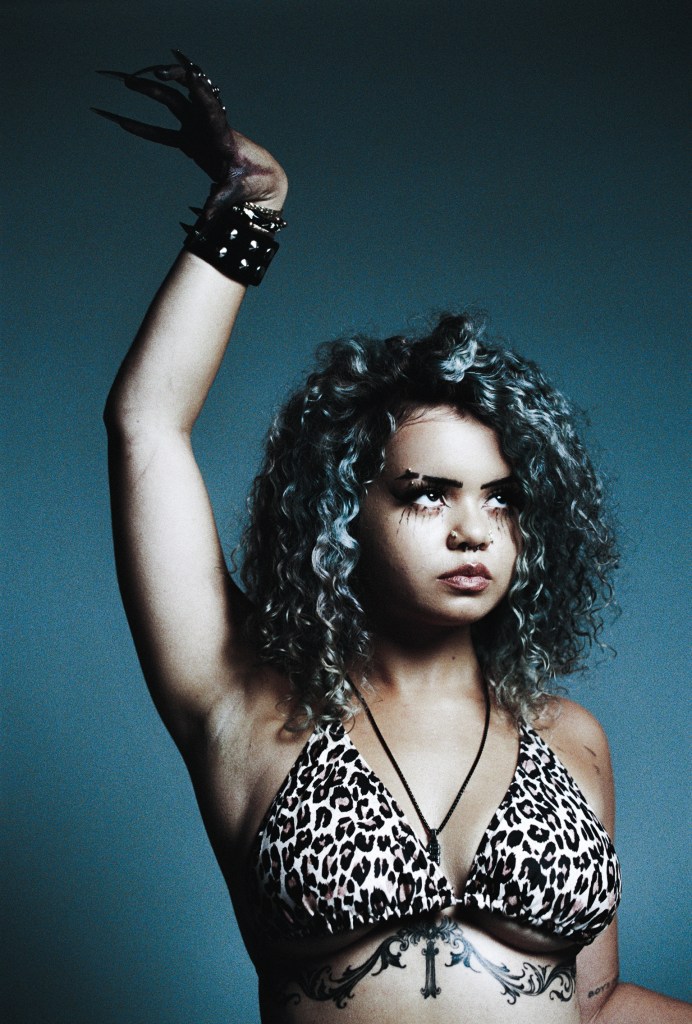
Even as they look ahead, Binnix is already imagining how this story continues. “Honestly, I have the next two albums planned in my head already,” they say. “I already know what the story is going to be and how it’s going to link to this one. The electronic side of me is not leaving anytime soon. I’m never going to leave any genre I’ve touched. If I’ve touched a genre, it’s going to come back. Like, for example, ‘hallelujah (interlude)’ is sticking out like a sore thumb in this album, but in a tasteful way. And I meant it to be that, because it’s an interlude. I’ve touched full country before, and it’s never going to leave. Any genre I touch will always come back.”
That kind of persistence, both creative and emotional, defines what Black Polish stands for. “I would hope that [listeners] would take away self-forgiveness and being okay with living in the moment and trying to figure yourself out, giving yourself a lot of grace through those moments,” Binnix says. “There can be a lot of embarrassing things you do when you try to find out who you are. The album represents a loop, a cycle that is going to happen again and again and again, but you shouldn’t push those experiences away.”
They continue, “I think it’s really valuable to live through those hard experiences because they just get easier over time, because you always learn something. Don’t be sad if bad things happen to you, because sometimes they’re meant to, to make you strong. And don’t blame yourself for them. It’s all good.”
YUNA is out October 29 via BMG.

 Culture Cabinet
Leave a comment