
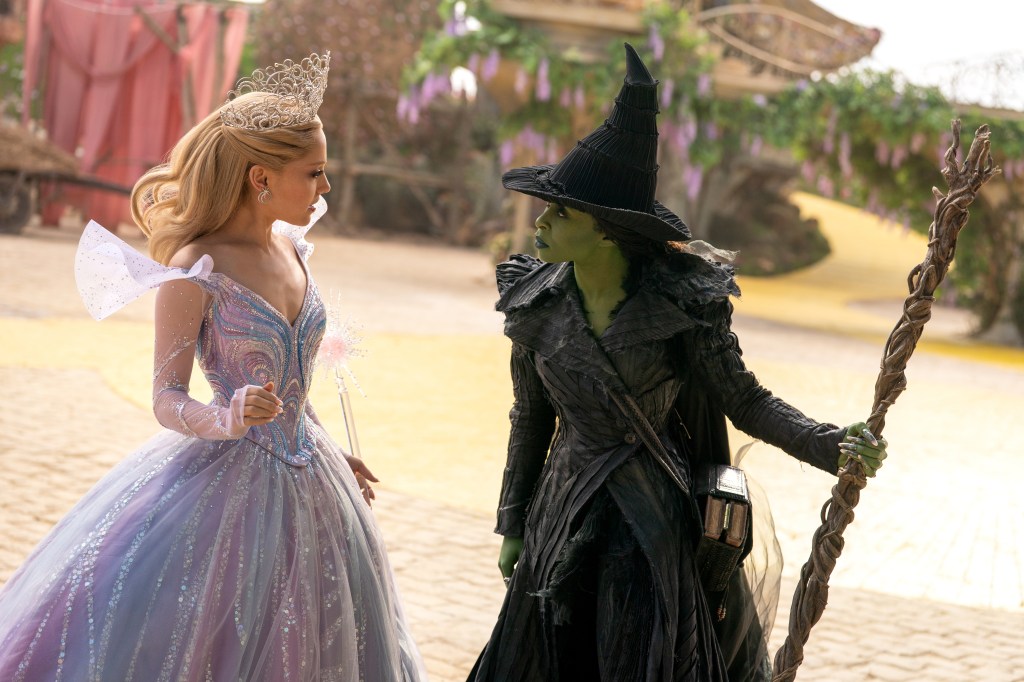
It’s time to return to Oz.
After much anticipation, a marketing campaign that could fill the entire Emerald City, and fan theories swirling around more vapidly than a twister, Wicked: For Good is finally here.
Taking place a year after the events of last year’s Wicked: Part One, this film finds our heroines on starkly different paths. All of Oz is hunting for Elphaba (Cynthia Erivo), vilified by a society that’s eager to swallow up the propaganda fueled by The Wizard (Jeff Goldblum) and Madame Morrible (Michelle Yeoh). As Elphaba is on the run as a fugitive, Glinda (Ariana Grande) flourishes as Oz’s newly anointed symbol of hope, even if maintaining her spotless image comes at the price of remaining neutral while her best friend is slandered. When both women are forced to converge paths again, they must make choices that alter their lives for good.
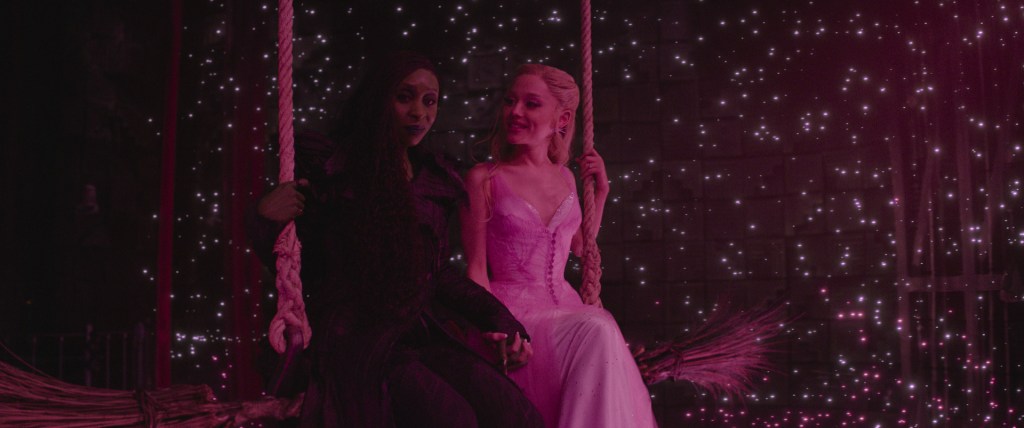
The film is largely inspired by the second act of the stage show Wicked, which is loosely based off the 1995 novel of the same name, written by Gregory McGuire. The film includes all of the Stephen Schwartz-composed songs featured in Act 2 of Wicked, with additional songs added, and features an ensemble cast that aside from the above includes Jonathan Bailey, Ethan Slater, Marissa Bode, Bowen Yang, Bronwyn James, and Colman Domingo.
The obvious standout of this film is the performances of its two leading women. While both Erivo and Grande proved themselves worthy of these roles in Part One, both actresses significantly raise the bar in this film, giving arguable career-defining performances.
While Elphaba has some of the most notoriously difficult songs in musical theatre canon, Erivo proves that she is one of the strongest vocalists of our generation, making the power ballads seem effortless. Her haunting and potent rendition of “No Good Deed” is not just a highlight of the film, but easily one of the best performances seen in a musical film in recent memory. Erivo remains steady in making sure that Elphaba’s underlying sense of compassion and empathy never shy away, there’s a sense of power that emulates from Elphaba that we don’t get to see too much of in the first film. The rose (or emerald) tinted glasses are off. The illusion is ruined, the man behind the curtain is a fraud. Elphaba sees the world for what it is now, and while she doesn’t let that harden her into the cruel “wicked witch” that she’s been sold to be, she does own her power as no one’s but her own. Erivo masterfully balances those complex emotions, letting Elphaba step truly into her power, and making her a figure that is even easier to root for than before.
Ariana Grande is also at the top of her game in this film. Wicked: For Good takes the baseline of Glinda’s character development provided in the stage musical, and expands on it in a way that greatly services the character. While Glinda does not even pretend to find the public adoration she receives addicting, we see her not only try to come to terms with how her behavior harms Elphaba, but the public that she also adores, as the luster of the Wizard’s lies slowly starts to unravel for her (or, the bubble begins to pop, if you will). Grande gives a deeply human and emotional performance, allowing Glinda to remain soft, feminine, and at times petty, while giving her a moment to step into her own power through taking accountability for herself. Glinda’s new song “The Girl in the Bubble” is a highlight of the film, filling a gap that the stage show really misses in not allowing Glinda a second-act solo.

Much like the first film, the musical numbers are well staged across the board, with songs like “Thank Goodness” and the finale allowing the ensemble to shine, and “Wonderful” allowing director John M. Chu to showcase his gift for creating a spectacle on screen. Fans of the musical will be thrilled to see the return of “The Wicked Witch of the East,” Nessarose’s song that is not featured on the Original Cast Recording. And, both Bailey and Erivo will send chills down the audience’s spine with their vocal talents during their ballad, “As Long As You’re Mine.”
While the film is certainly not perfect (there’s a strange undersaturation featured throughout so much of the Emerald City scenes that feels not very on-brand for the world of Oz, the first half of the film struggles a little bit with pacing, and some of the visual effects feel a bit uncanny valley at times), there’s something to be said for the importance of Wicked at a time like this. The Wizard of Oz stories, be they the L. Frank Baum novels, the 1939 film, or the numerous adaptations after, have always had political undertones.
Yet, the questions raised in Wicked: For Good feel more timely than ever. What does it mean to stand up for what you believe in? How does society react to manufactured fear, and how do we combat it? Where do we draw the line between comfort for our own behalf and stepping out of our “bubble” for others? While these messages feel eerily timely, it only proves that they are questions that society has grappled with since the dawn of time. But, Wicked: For Good invites the audience to look inward, beyond over the rainbow, into what it means to have compassion and empathy for people that we’ve been conditioned to believe may not deserve it.
Wicked: For Good does not quite meet the spark of the first film, but is nevertheless a strong and satisfying entry for not just fans of the stage musical or Oz-universe in general, but for anyone wanting a whirlwind twister of a cinematic event. And with its mass success, one can only hope this will pave the way for a renaissance of the movie musical.

But even if it doesn’t, let it not be undermined that female-led films are not just important . . . they succeed.
Wicked: For Good is in theaters November 21.

 Culture Cabinet
Leave a comment