
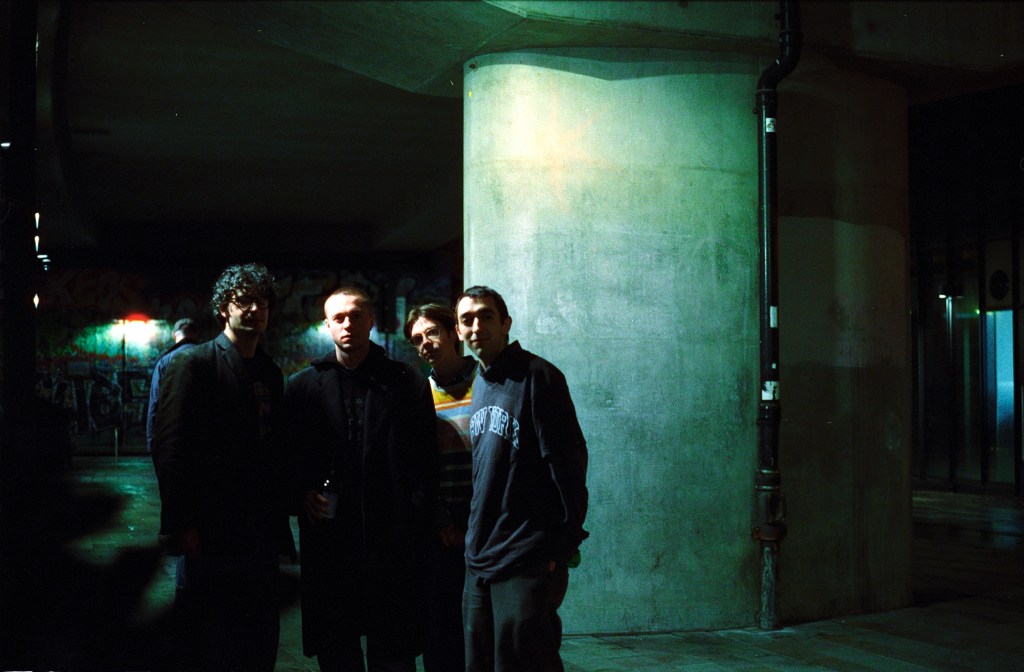
There’s something that feels almost radical about hearing a band actually sound like a band. A group of people in a room, pushing and pulling at tempo, allowing songs to swell imperfectly, allowing some moments to soar and others to fall short. And while that may seem simple at first thought, when I sat down with deathcrash frontman Tiernan Banks to discuss the band’s new album, Somersaults (out now), I suddenly became aware of how rare traditional bands are in today’s mainstream music.
But, as our conversation progressed, I began to realize why the collaborative process that comes by virtue of a band, where multiple members have a say in the music being created, is so important. When I mention that the record feels adjacent to mid-to-late ’90s or early 2000s pop punk or slowcore, Banks laughs gently at the idea, but assures that deathcrash isn’t really interested in clear labels or being boxed into a specific genre. They just want to capture the cohesive feeling that the entire band experiences when making music together.
While deathcrash, a British band, has adopted the genre “slowcore” generally for their shound, they place more of an emphasis on the now. It’s evident that the band prioritizes the audible trace of four individuals playing together over anything else in their writing. Banks explains, “I think it’s really important to us that, you know, we are a band, and that you can hear the people that are in the band playing. I think we get a bit frustrated often with, a lot of music that happens, or recordings that happen at the moment that give you no real sense of the individuals that are involved in the music.”
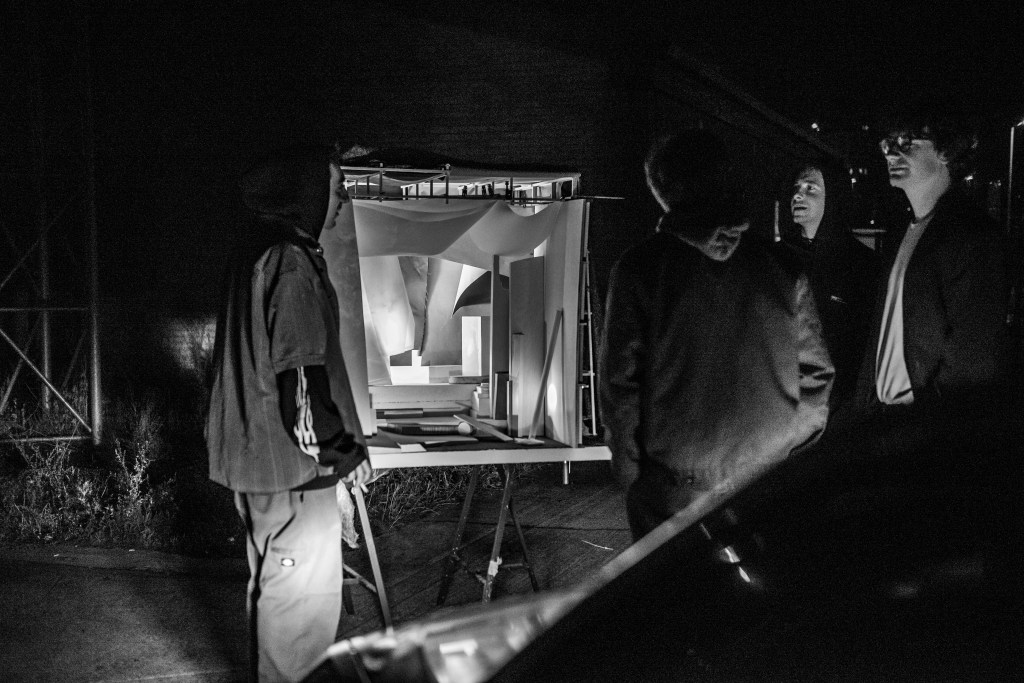
Which isn’t to say Banks feels clarity is the same thing as sterility. “I don’t like really clean or really pristine recordings,” he says. “I think there’s a place for all of those things, but particularly if you’re a band, I think it’s nice to get across the fact that that is the case.”
Their philosophy traces back to their origin story as a band, one that on the surface level, feels all too common, even if their music is anything but. “We just started playing together at university, basically,” Banks shrugs when asked of the band’s origins. The members, which aside from Banks includes Matthew Weinberger, Noah Bennett and Patrick Fitzgerald bonded over shared influences, played parties for free entry, and gradually built a small local scene. “And then eventually, when we moved back to London, we thought, ‘Well, let’s do this band thing seriously.’”
Nearly a decade later, Somersaults arrives after a deliberate recalibration and period of experimenting with sound. Their previous record, 2023’s Less+, was conceived as something more contained. “We’d put so much time into what was a needlessly long LP before that, and thought, ‘We’re just going to do seven songs and keep this album short. We’re going to do something that’s very, very principled, has very specific rules, is very minimal.”That record served its purpose, but it also clarified what they wanted next. They knew another full-length album was coming. What they didn’t know was what it would sound like.
Initially, they leaned into darker terrain. “We thought we want to really double down on these slow, doomy, brutal ideas that we had for certain songs.” But time, and patience, reshaped that instinct. “We went into the studio and trialed a few of those, and sat with it for a while, and then decided that we didn’t like them, and it didn’t really feel very true to kind of who we were at that time,” says Banks.
Instead of rushing, they lay in wait, making sure that each song was exactly how they wanted it, and that it would withstand the test of time. “We really didn’t want to rush it, and we felt we maybe had rushed our previous album. [After writing a song] we kind of thought, ‘Well, look, in six months time, if we still like it, then it’s probably good enough for the record.’”
The result is an album that feels more expansive, more open in its chest. Touring larger venues also helped unlock that shift. “We were enjoying opening our songs and being a bit more confident and expressive with them. That helped us find the sound of the new record, which we think is probably a little bit more confident, has a little bit more like energy in it.”
Creative collaboration, especially among long-time friends, is rarely seamless, something Banks is candid about. “We definitely have arguments about our songwriting, and we disagree on lots of things.” Earlier in the band’s life, he admits, he was more guarded. “I used to be a lot more protective about ideas that I would bring to the table. If people didn’t like them, it felt much more of like a felt more damaging.”
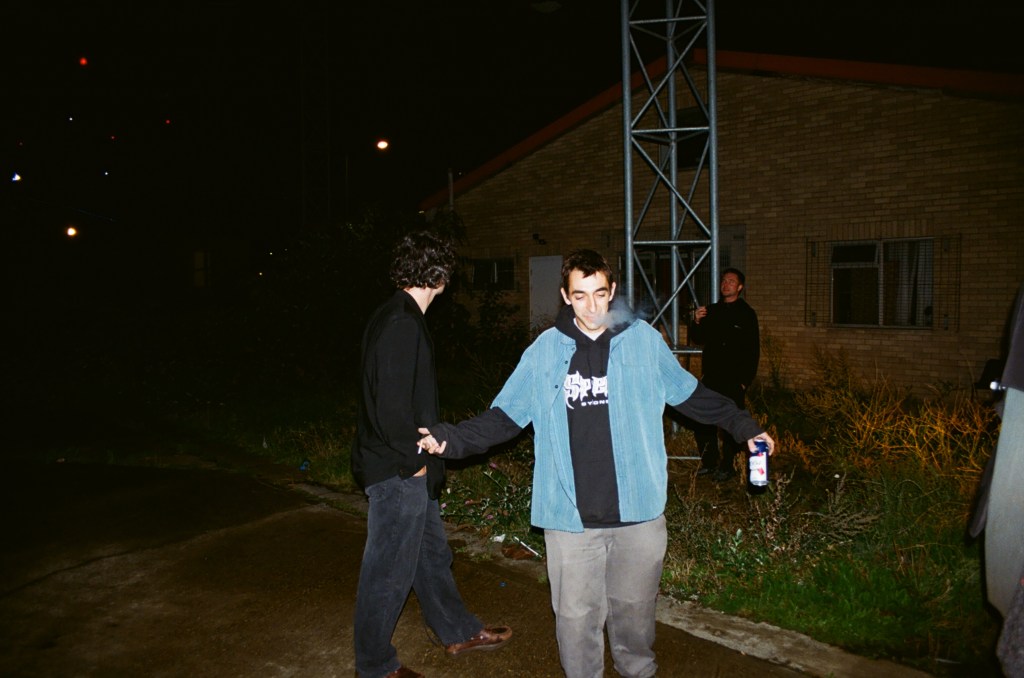
Time softened that instinct, and thankfully, his friendship with his fellow bandmates did not suffer for it. The extended writing process made individual ideas feel less fragile. “I think [our songwriting process] allowed for more freedom of expression, because maybe each idea that you brought to the table didn’t feel so important.” Paradoxically, that looseness allowed for greater depth. “In a weird way, it kind of then allows you to say much more important things.”
That emotional evolution threads directly into the album’s thematic core. When asked what he hopes listeners take away, Banks hesitates before landing somewhere quietly honest.
“In terms of the album, we don’t really want to put too many ideas into people’s heads about it beforehand, but I think, it kind of is clear that it’s an album that is in some way about growing up and the sort of disillusioning process of that.” He shrugs at the universality of it. “It’s not necessarily like the world’s most exciting idea, but I think it is important to us. And, it does feel true.”
At its core, deathcrash’s persistence feels anchored in something simpler than ambition. “We do make music authentically, “ Banks says. “It does feel really important to us.” And while whatever comes next professionally for deathcrash may currently remain uncertain, what isn’t uncertain is the impulse to keep creating. “We have this urge, for better or for worse to express things that are happening in our lives or ways that we feel like in our music, and we really enjoy doing that as a group. It makes it more fun and less lonely to do that.”
In an era where so much music feels engineered for immediacy, deathcrash’s commitment to process, to slowness, to friction, to communal risk, feels almost defiant. The sound may gesture toward older eras, but what lingers is something else entirely: the sense of four people standing in a room, listening closely to one another, and choosing to keep going.
And sometimes, that’s more than enough.
More information about deathcrash can be found here.

 Culture Cabinet
Leave a comment